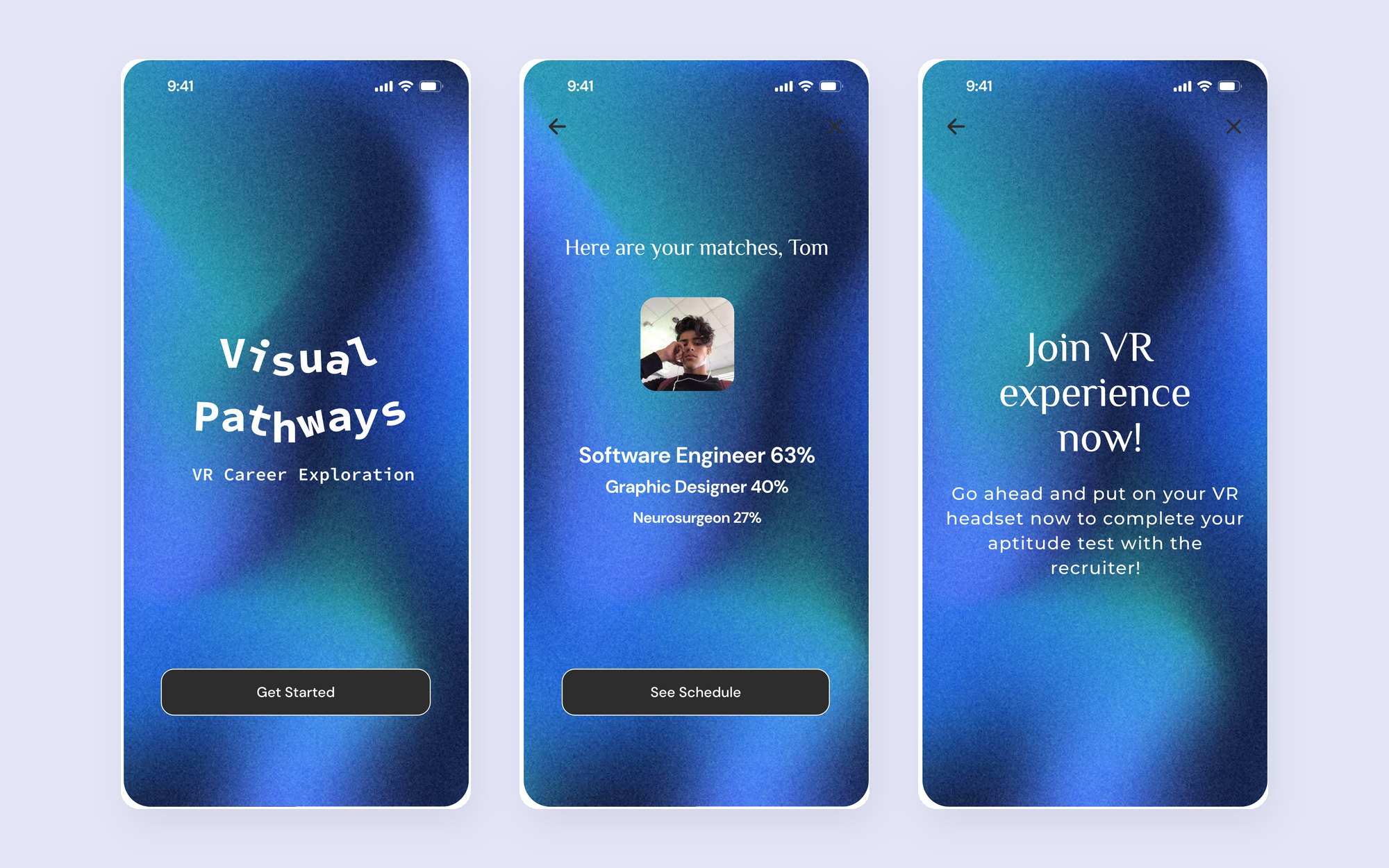
Visual Pathways pairs a career-matching quiz with VR job shadowing at in-person career fairs, so high school and early college students can try a career next to a real professional. Our team of five tested it in two live career-fair sessions.
20
Participants in our first live career-fair session
2
Live prototypes, each shaped by participant feedback
4
Interviews with students and an industry professional
Problem
70%
of American workers are unsatisfied with their career choices (Inc.)
5 to 7
career changes in the average working life (Novoresume)
41%
of students feel unprepared to choose a career at graduation
How might we help students explore career paths they'd never imagine, through VR, while connecting them with real professionals?
Research
We ran 4 semi-structured interviews with 2 college students, a high school senior, and an industry professional.
Long lines leave little time for 1:1 conversations.
Students were excited about VR but didn't want to lose face-to-face contact.
Professionals want to meet motivated students, not everyone in line.
“I think having the option to do both [shadowing in person and VR] would be awesome, but I think it's crucial to be able to do it in person.” — High school senior
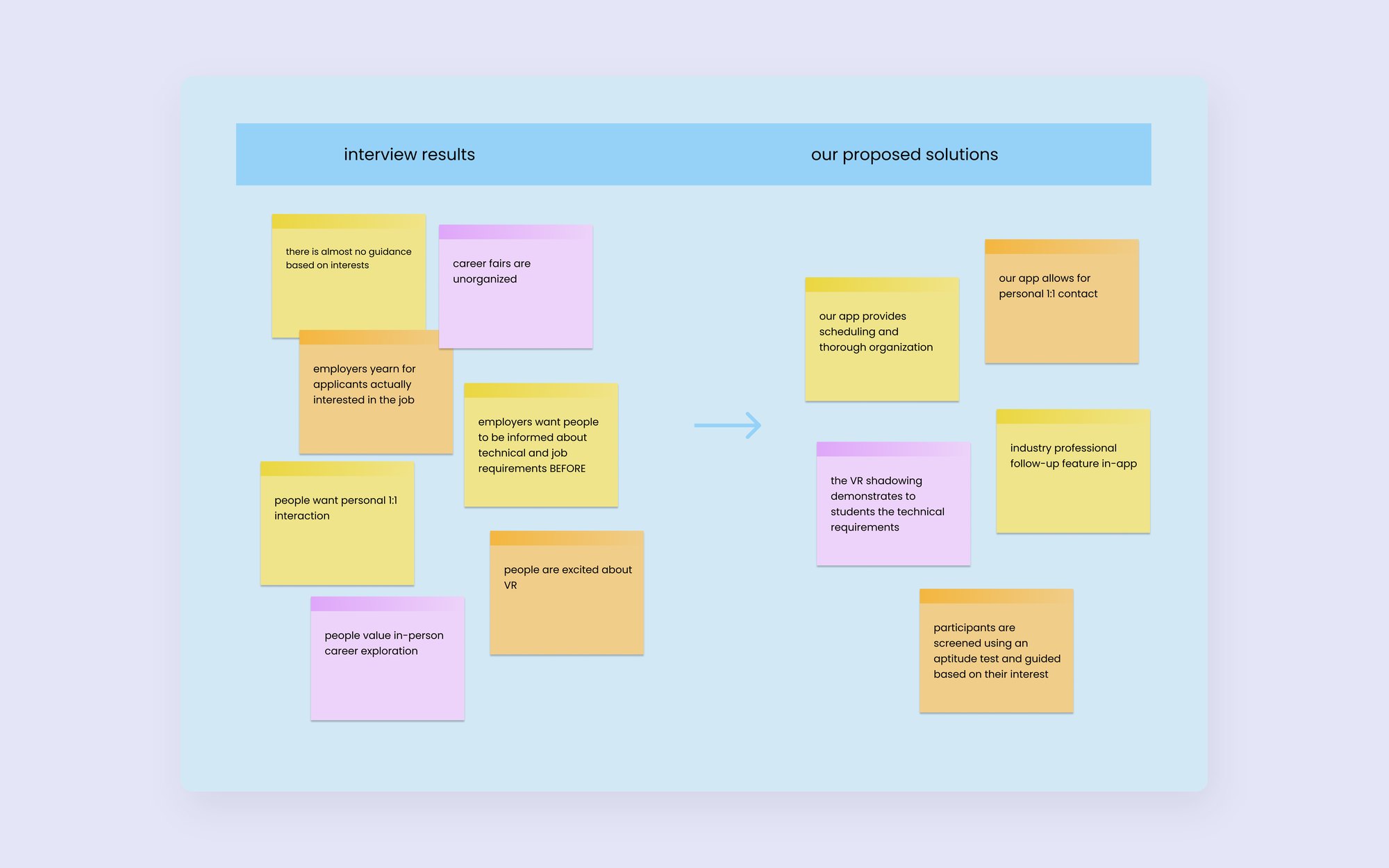
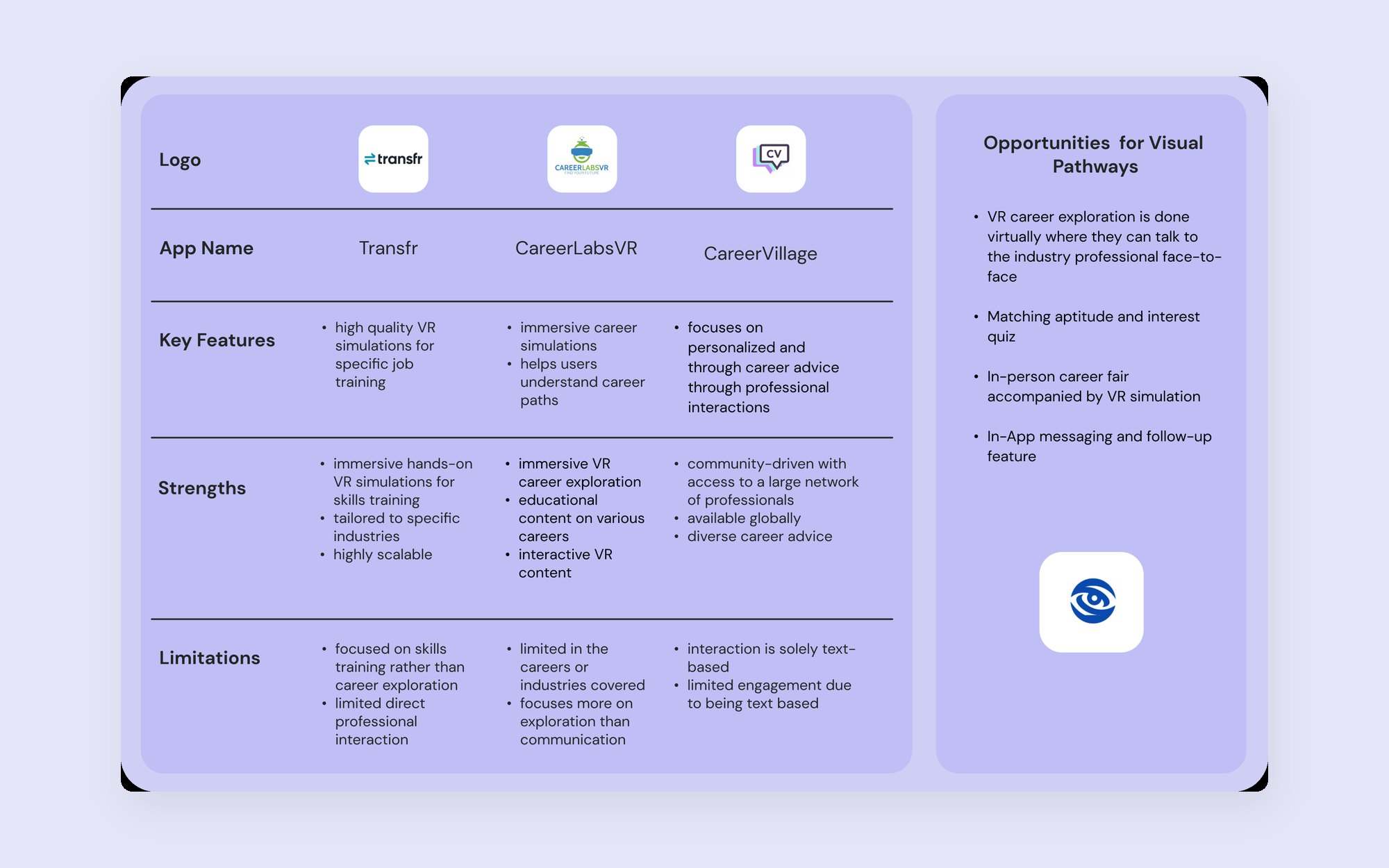
Transfr, CareerLabsVR, and CareerVillage each cover part of the problem, with VR simulations or text-based advice, but none pair VR with guided, face-to-face time.
Design process
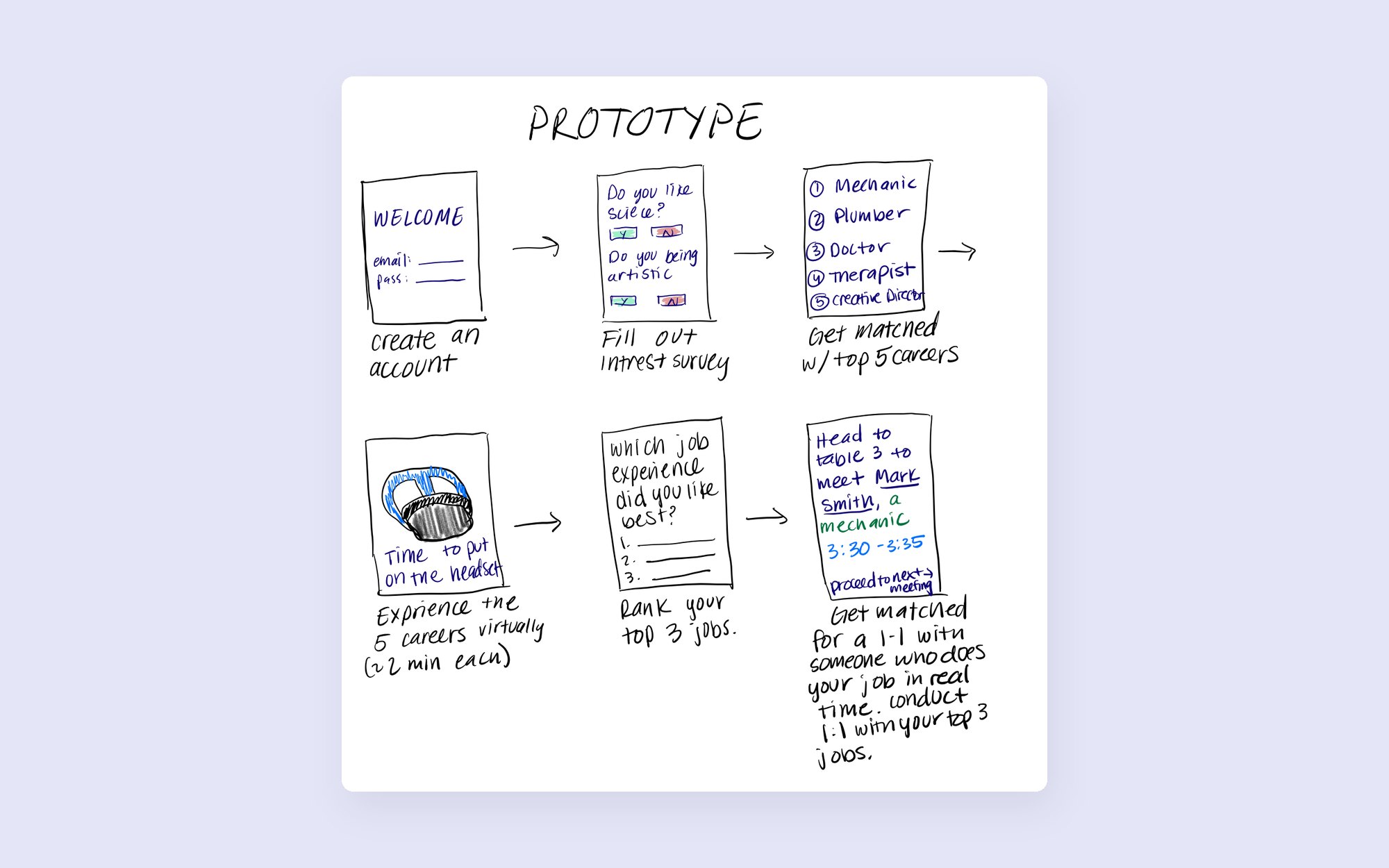
1 · Storyboard
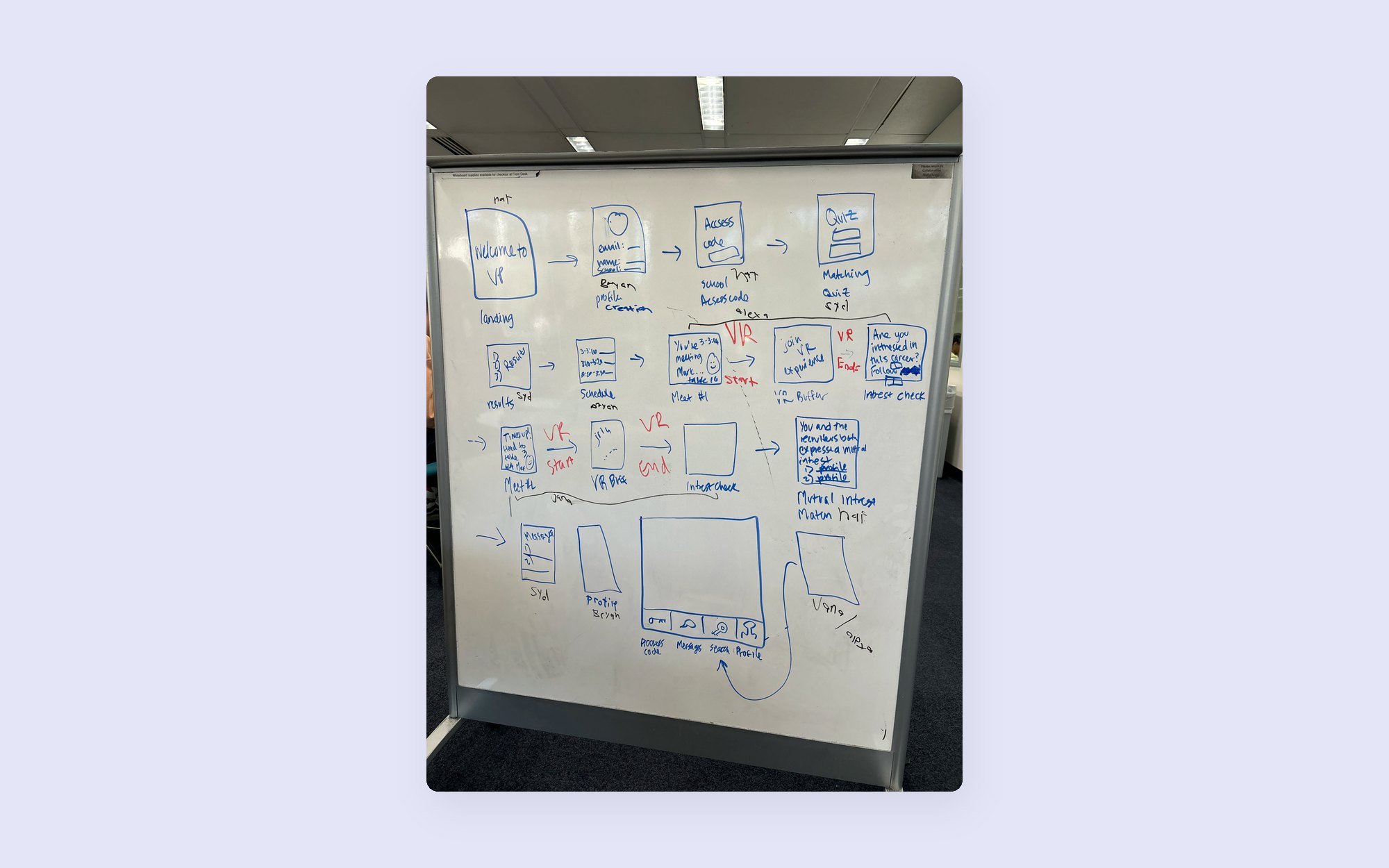
2 · App flow
Live prototyping
We ran our product as a real career fair. In session 1, 20 participants took our quiz, watched VR demos of their top matches on their own, and then met recruiters.
Careers felt irrelevant
We simulated VR as a live interaction instead of pre-made videos, so we could offer more relevant careers.
VR felt solitary
Students and recruiters entered VR together to complete aptitude tasks.
Little value for recruiters
Recruiters picked standout students at the end to find early talent.
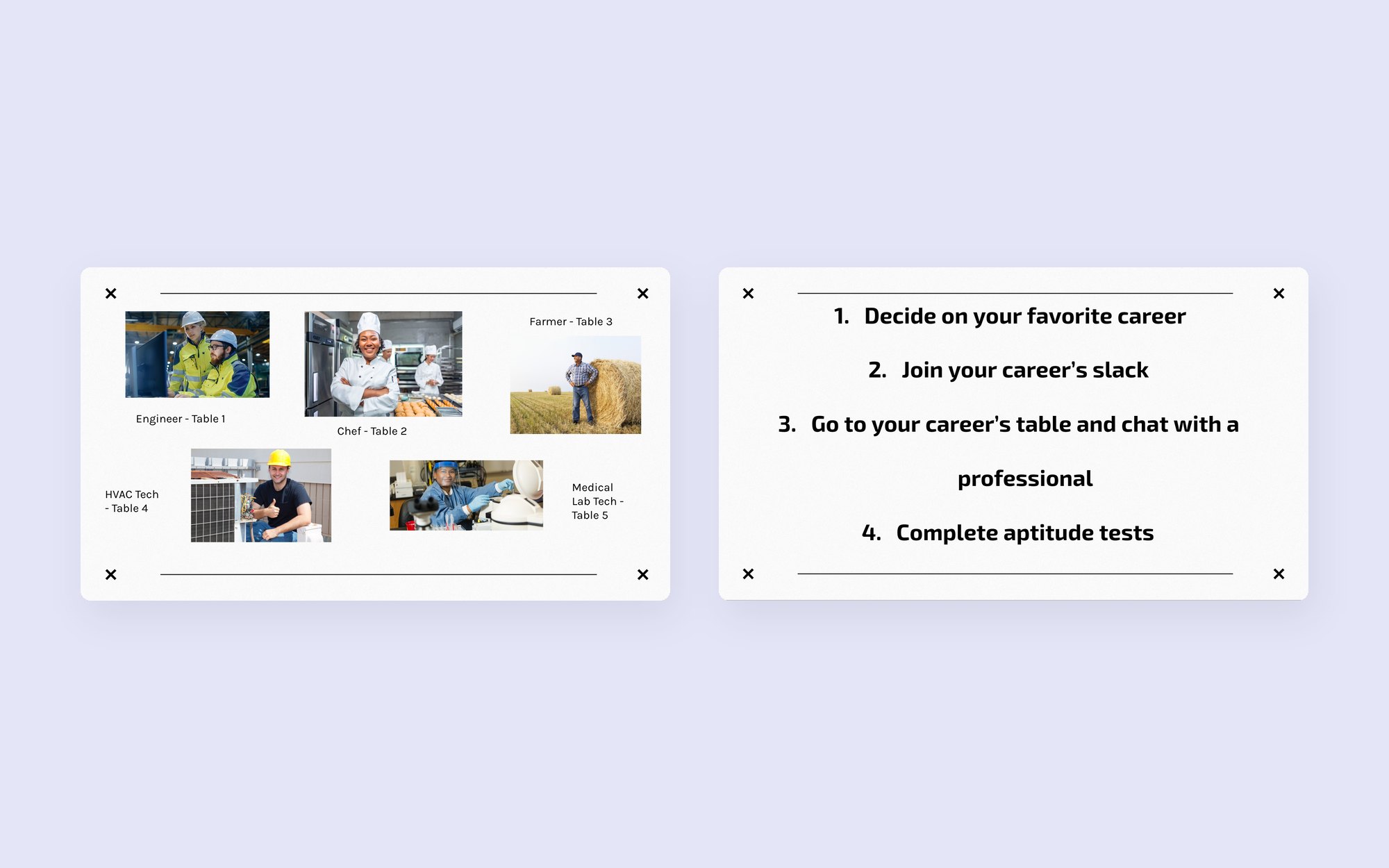
Session 1
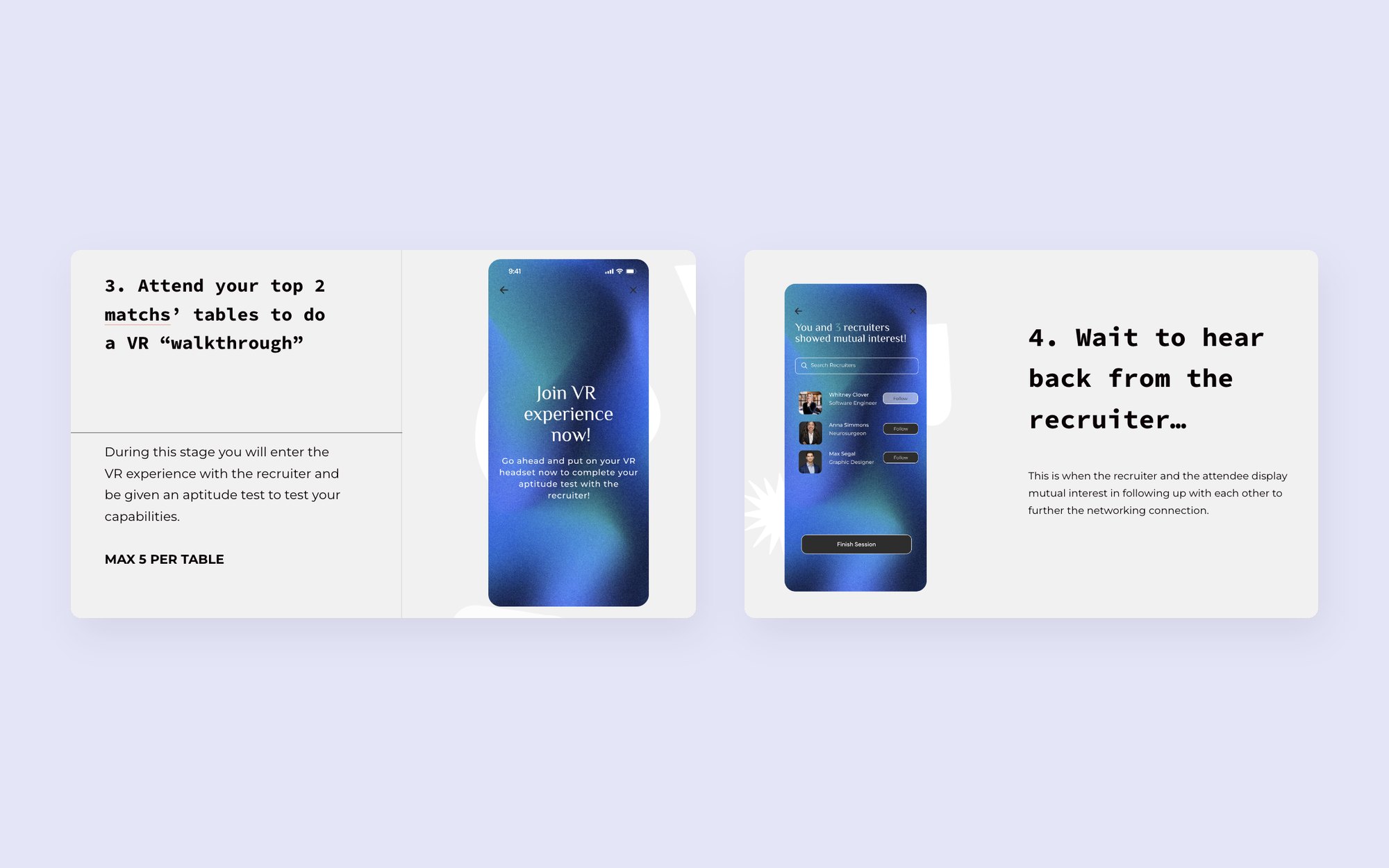
Session 2
“I liked being able to do the aptitude tests because it was more engaging.” — Session 2 participant
Final design
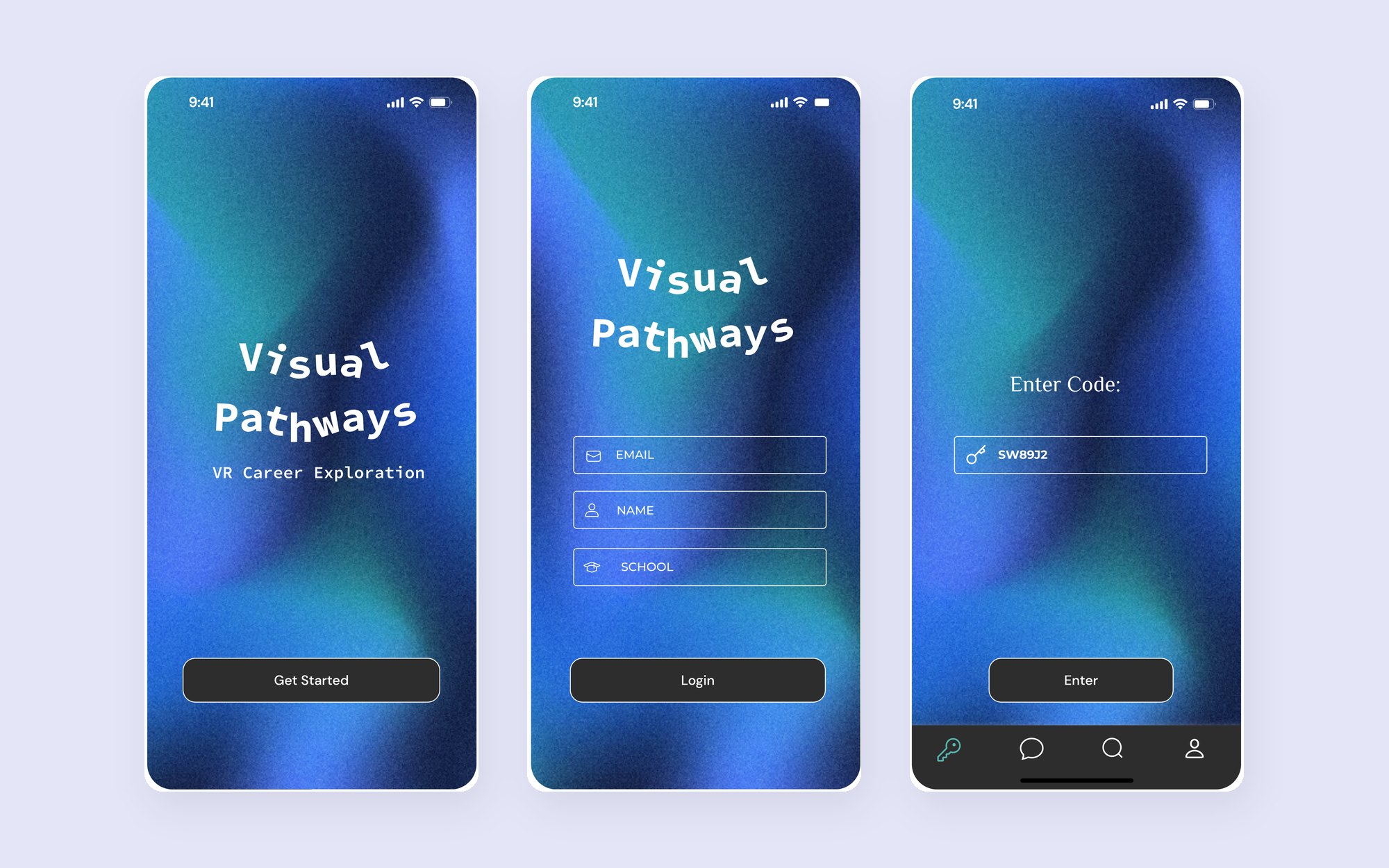
1 of 4 · Join
Students create a profile and join with a private code.
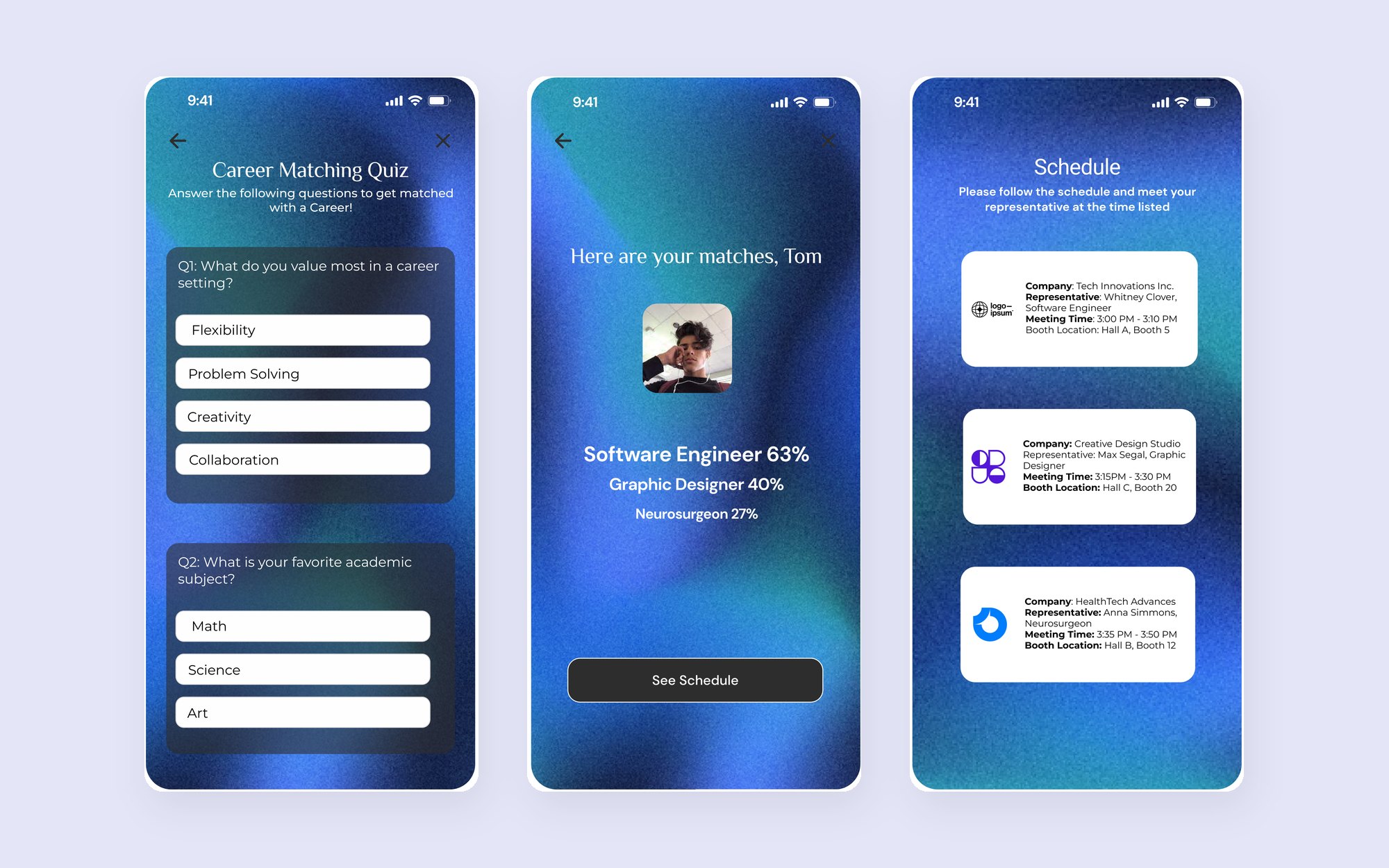
2 of 4 · Match
A career quiz finds top matches and builds a schedule of recruiter tables.
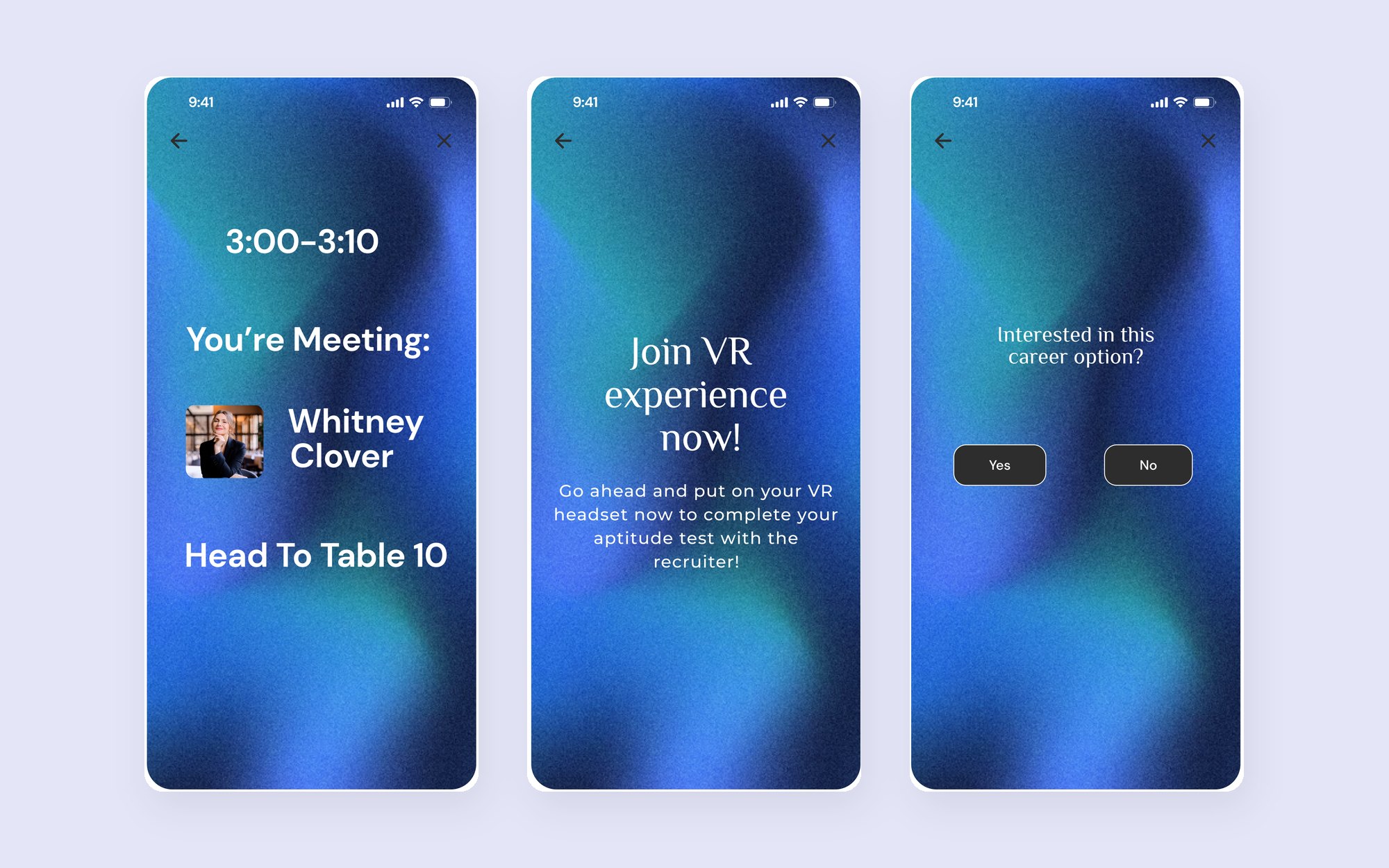
3 of 4 · VR
At each table, students put on the headset and complete aptitude tasks together.
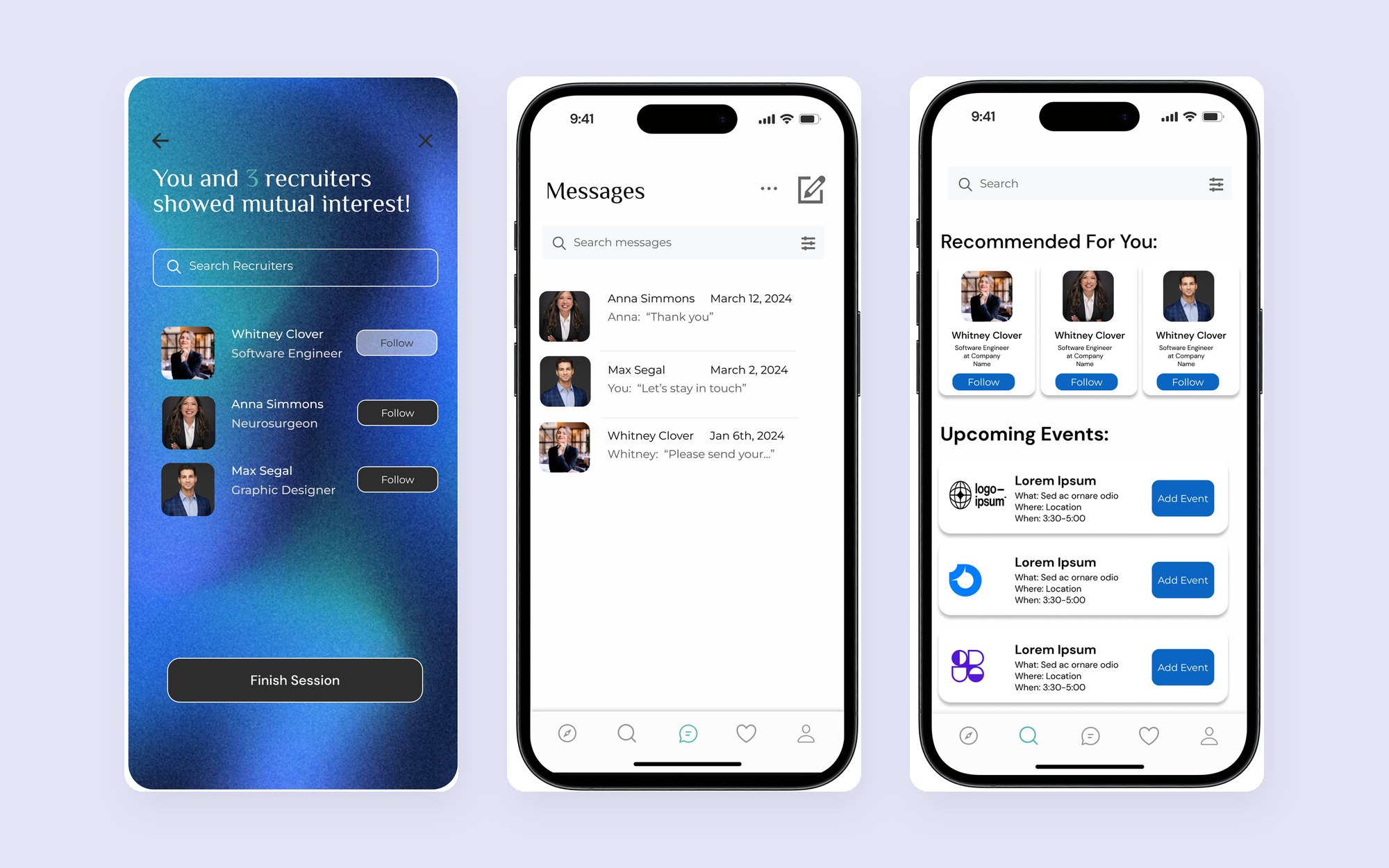
4 of 4 · Follow up
Recruiters and students can show mutual interest, follow each other, and message.
Reflection
01
Our biggest shift was making VR a shared activity instead of a solo video.
02
A career fair only works if recruiters get value too.
03
Gamification for younger students, and tools for schools to see how students engage with careers.
