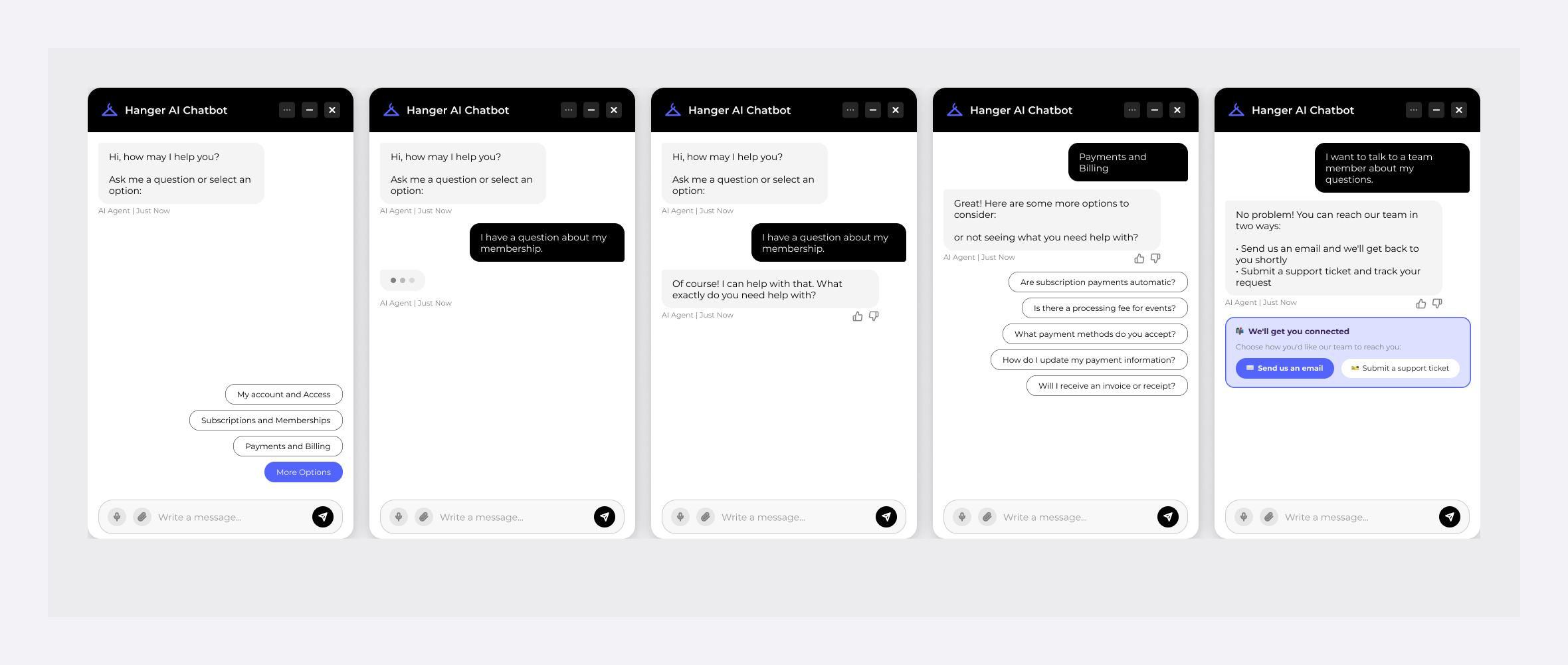
SIMON greets new members on Hanger, a platform where the fashion industry networks, finds events, and collaborates. I designed it end to end, from the first chat window to the failure states, and it went live on hanger.life in August 2026. Some details are left out for confidentiality, and screens use placeholder data.
Live
Shipped on hanger.life in August 2026 as Hanger's first line of support
3 · 17
Iterations and screens, from first chat window to failure states
75+
Reusable components I contributed to Hanger's Figma design system
Problem
Hanger was about to onboard its waitlist, and the platform does a lot at once. Until then, the only way to get an answer was to contact the team and wait.
How might we give new members instant, trustworthy answers, and a person when the AI can't help?
Competitive analysis
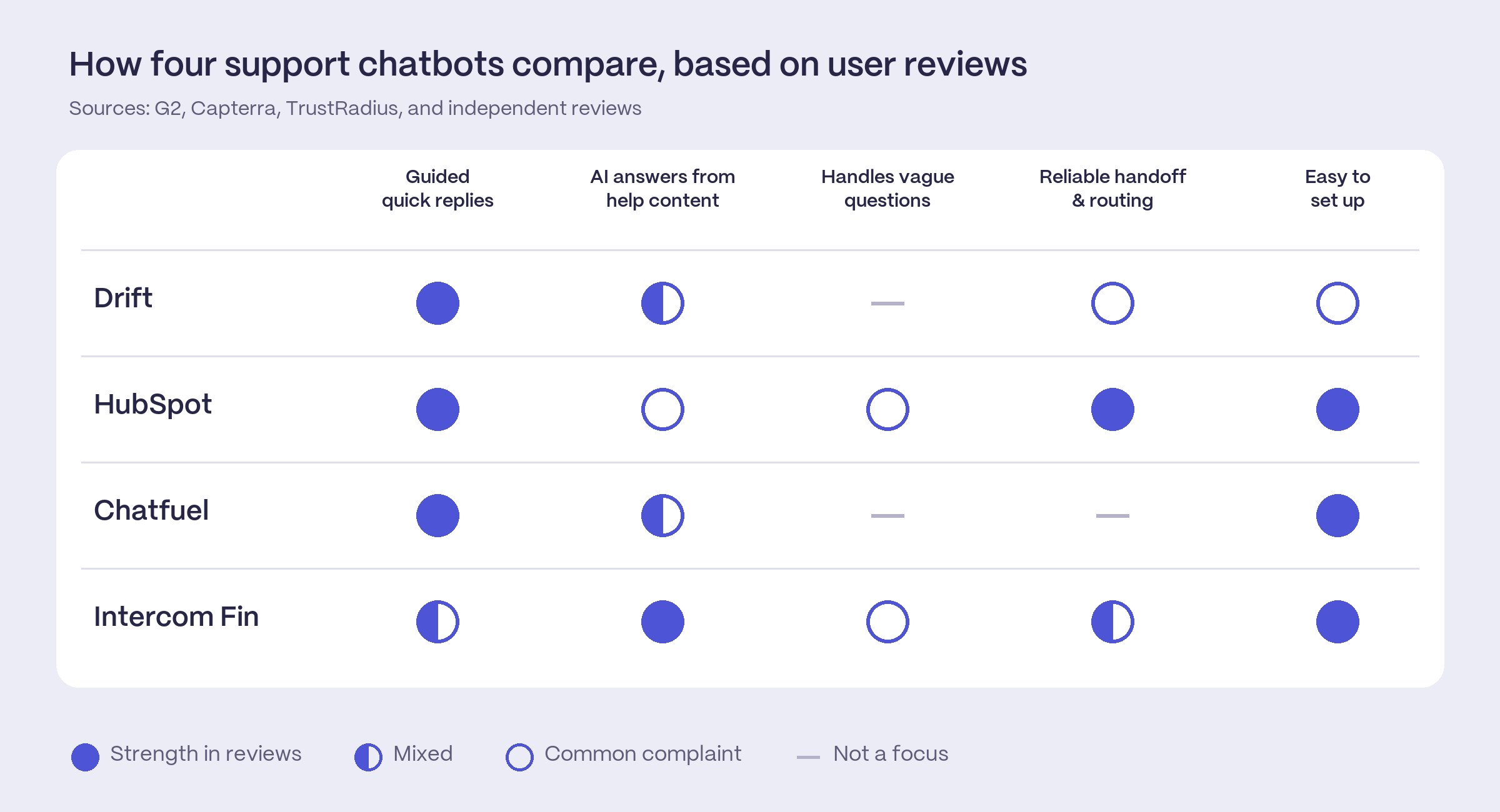
I compared four popular chatbots and read their reviews on G2, Capterra, and TrustRadius to see where each wins and where users get frustrated.
Include
• Guided quick replies, so no one faces a blank chat box (HubSpot, Chatfuel) • Answers pulled from help articles, with the source linked (Intercom) • A clear, always-available path to a person (Drift and Intercom complaints) • Answer ratings so the team can see what isn't working (Intercom)
Leave out (for now)
• Open-ended AI for vague questions at launch, since even Fin gets stuck in loops • Deep branching flows, which reviewers called convoluted (HubSpot, Drift) • Sales features like lead routing, because SIMON is for support
The AI wasn't ready to answer open questions reliably, and a wrong answer on day one would cost more trust than a limited one.
First idea
Ask anything. Flexible, but answers couldn't be trusted yet.
What we shipped
Tap a topic, pick a question, get a vetted answer, and still type if you want to.
Iteration
Welcome
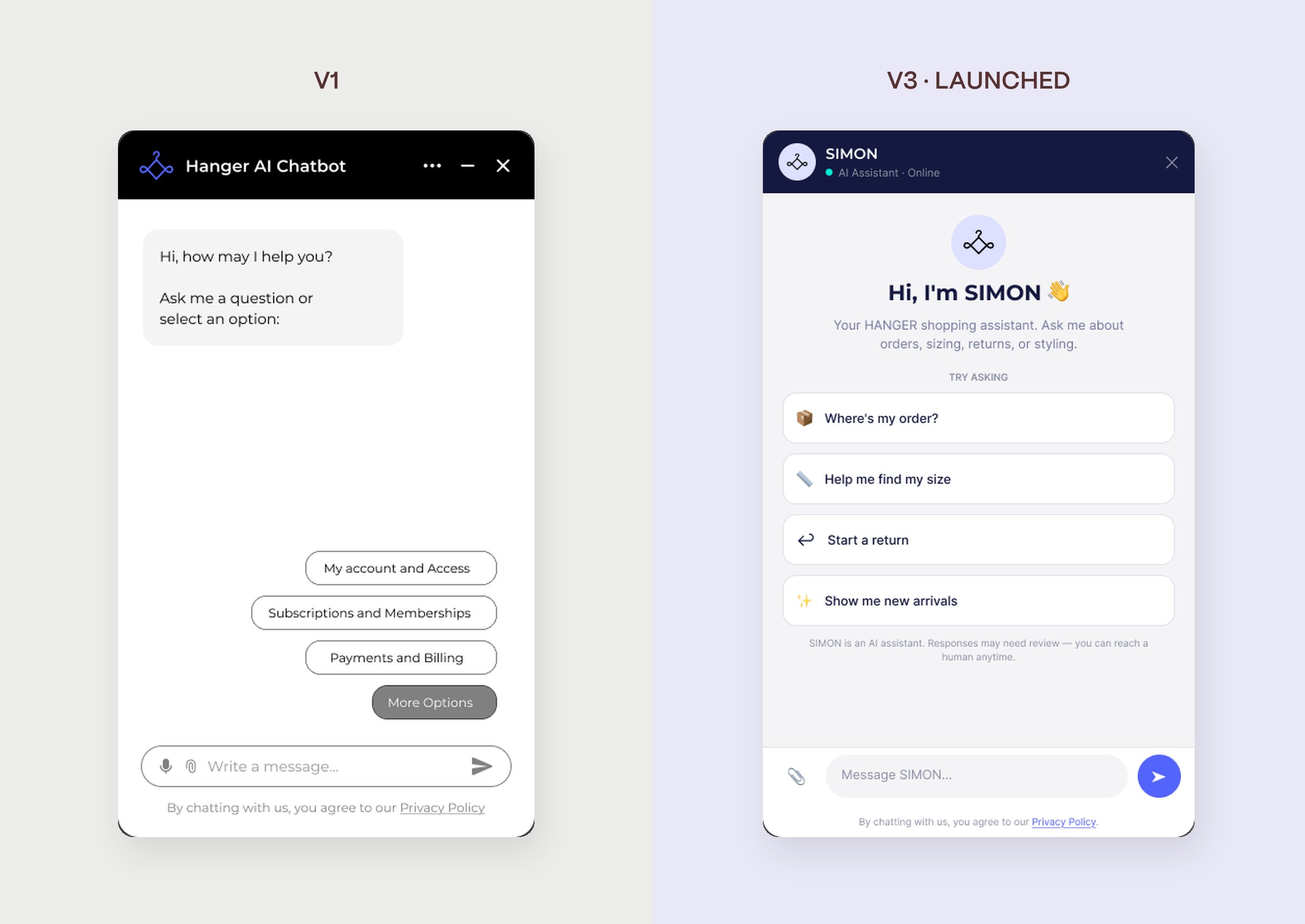
V3 introduces SIMON by name and puts suggested questions front and center.
Answers
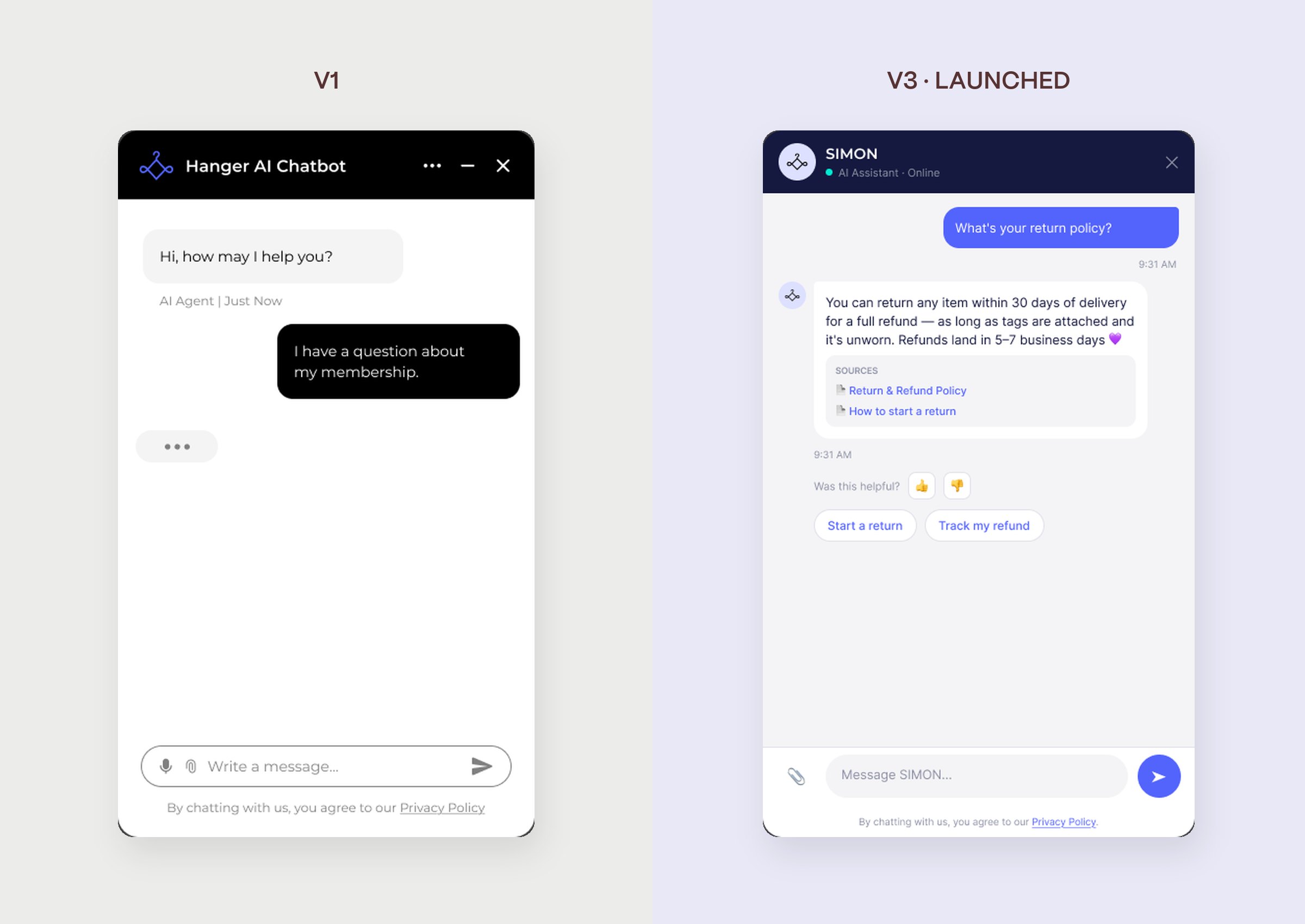
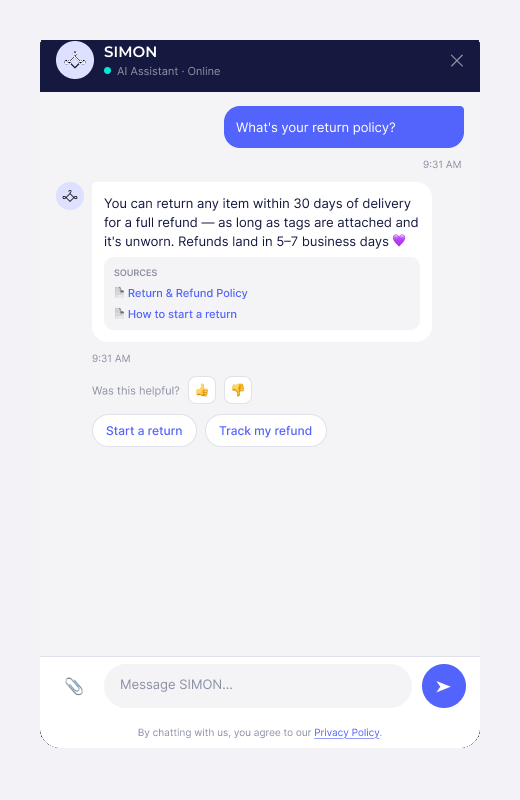
Source links, a "Was this helpful?" check, and next-step chips.
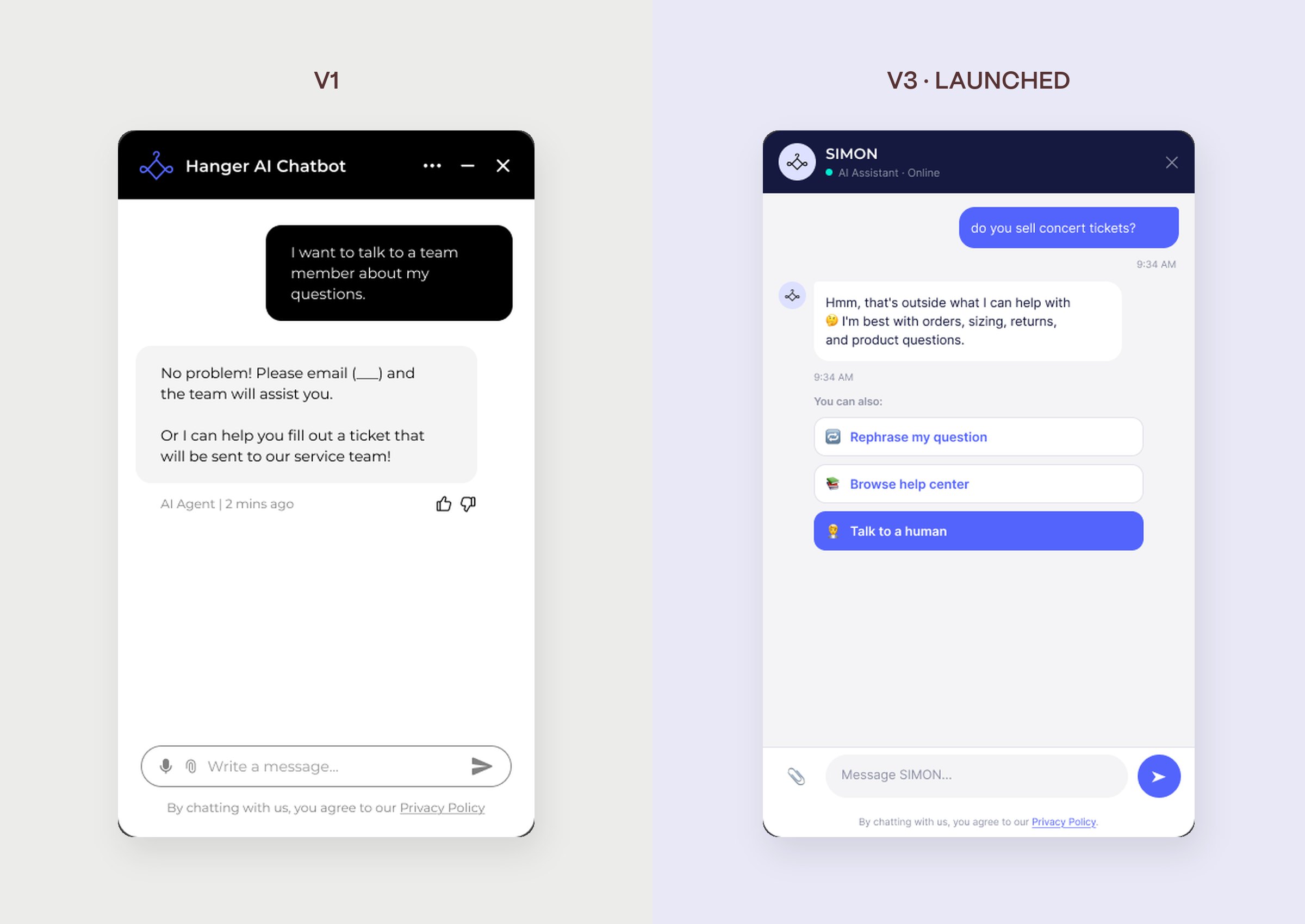
Can't help
Rephrase, browse the help center, or talk to a human.
Handoff & edge cases
The riskiest moment in an AI chat is the dead end, so every failure gets a clear next step.
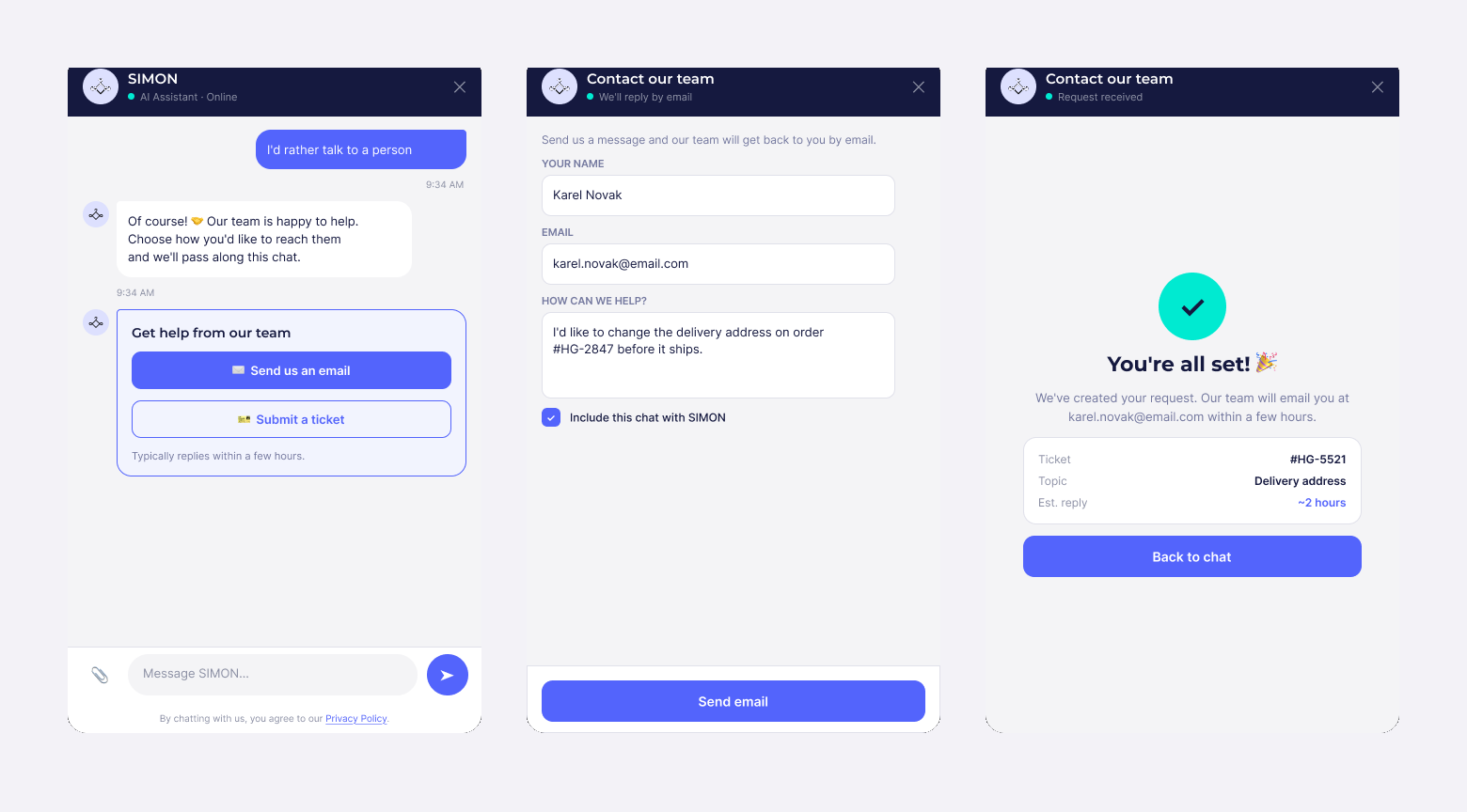
Human handoff
The confirmation shows a ticket number and when to expect a reply.
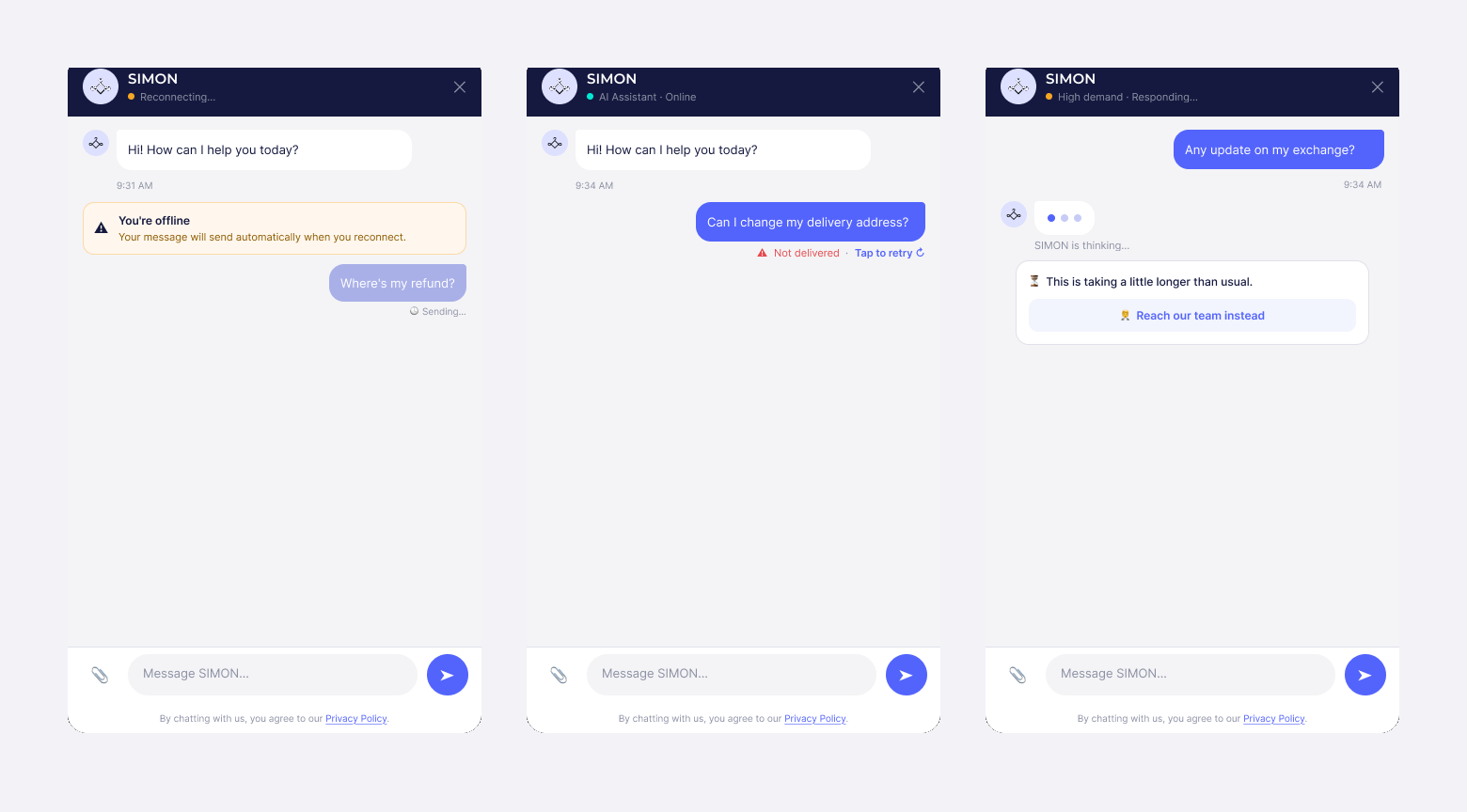
Failure states
Messages queue while offline, failed sends get a retry, and slow replies offer a way to reach the team.
Final design
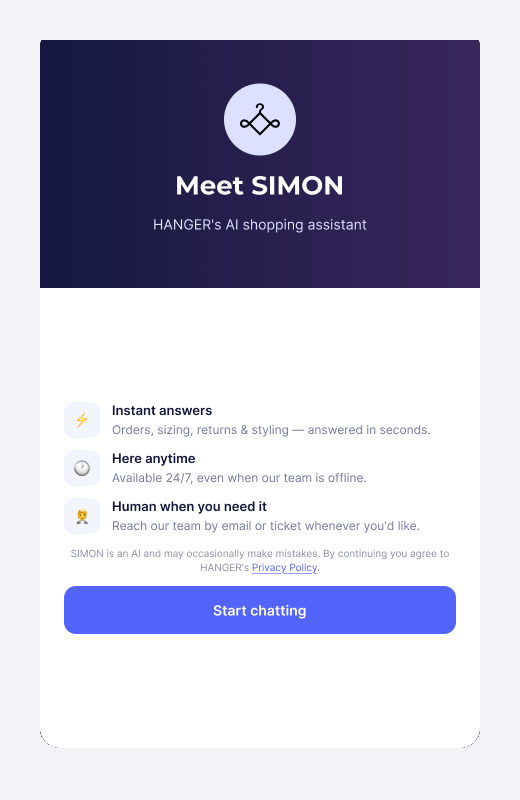
Before the chat starts, users see that SIMON is an AI, what it's good at, and that a person is always available.
Each answer links to its source and ends with a thumbs up or down, so the team sees what isn't landing.
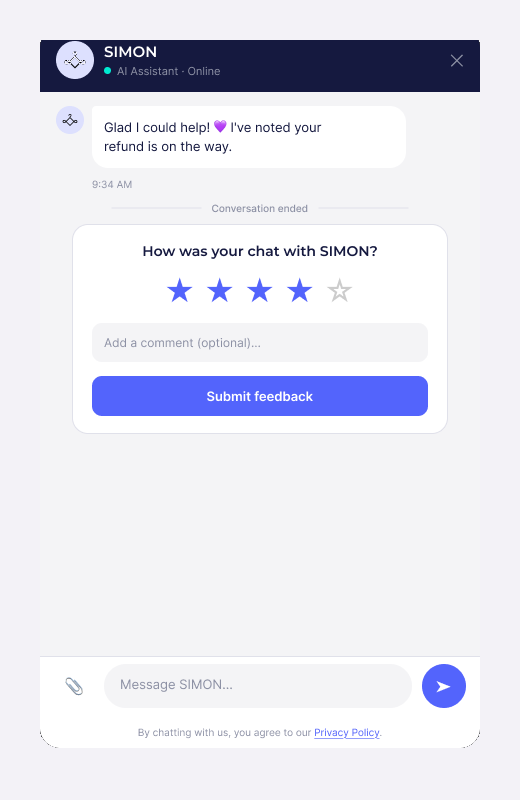
Chats end with a confirmation and a quick rating, a quality signal from launch day.
Feedback feature
Research I ran with Claude pointed to persistent, user-initiated feedback widgets getting 2 to 5 times the response rate of targeted surveys. I explored three directions for Hanger.
Direction A
Members report issues by chatting with SIMON.
Direction B
A feedback panel available on every page.
Direction C · chosen
A structured panel, plus a shortcut to report through SIMON.
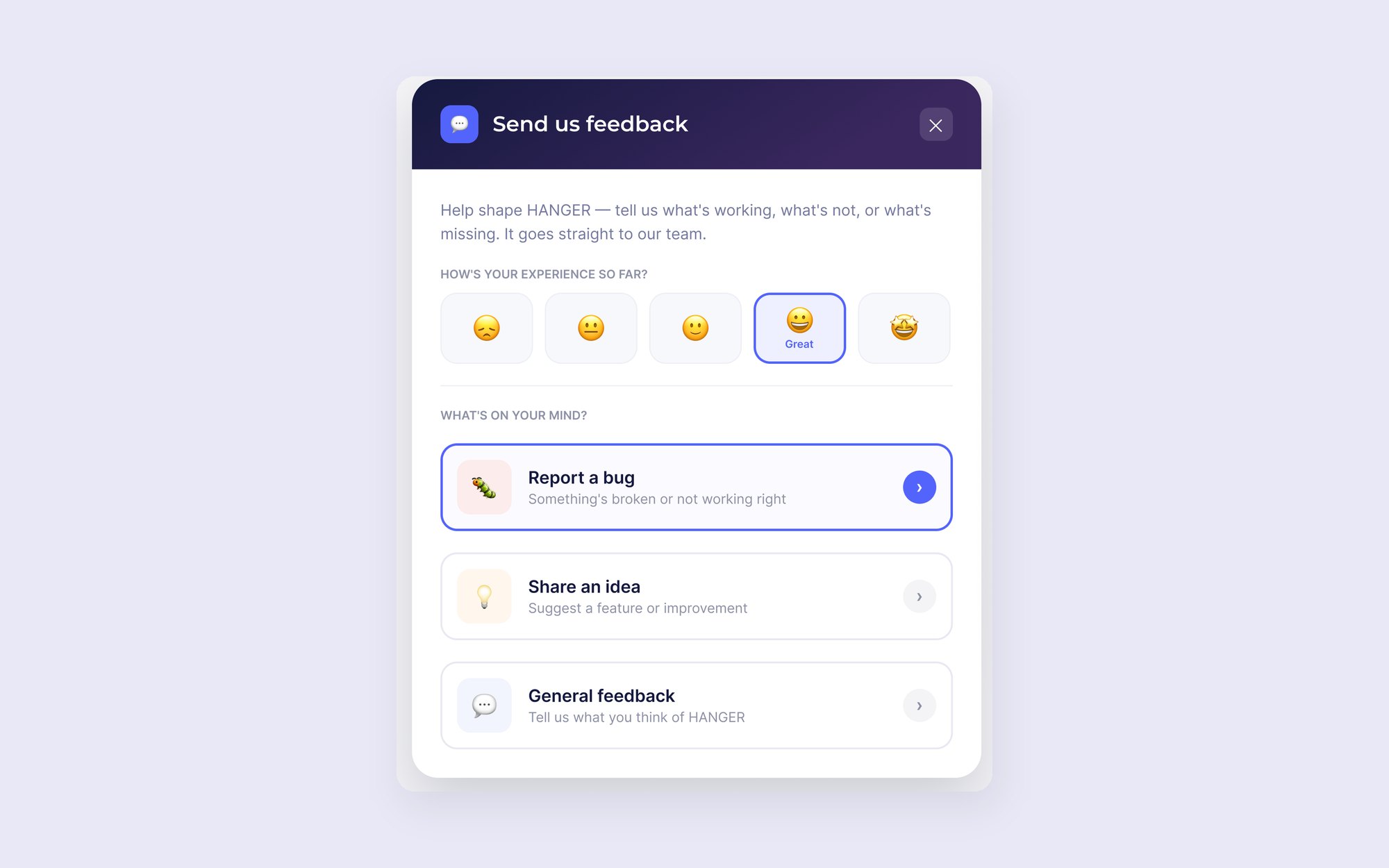
1 · Send us feedback
Report a bug, share an idea, or leave general feedback.
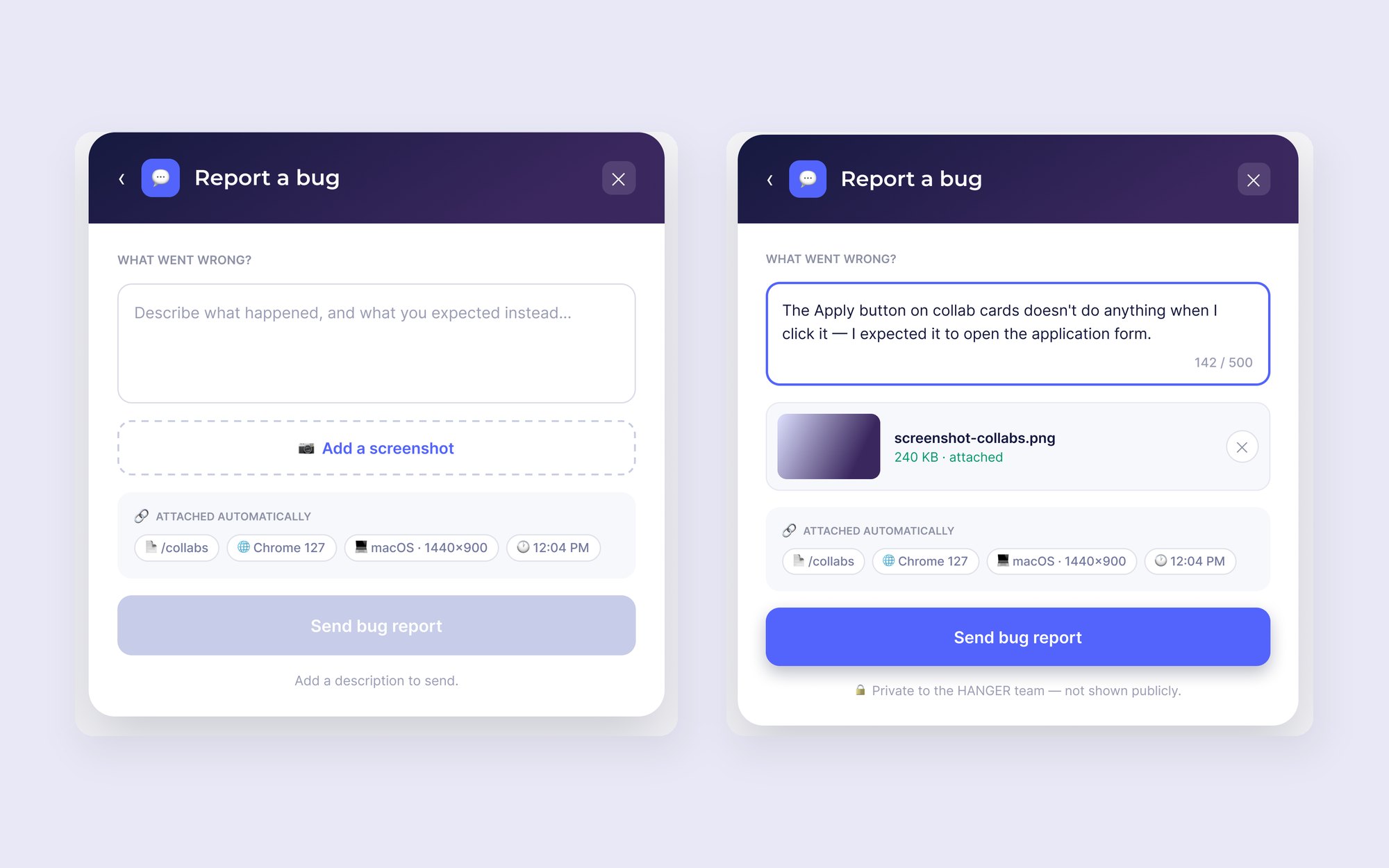
2 · Report a bug
Page, browser, device, and time attach automatically, and a screenshot is one tap away.
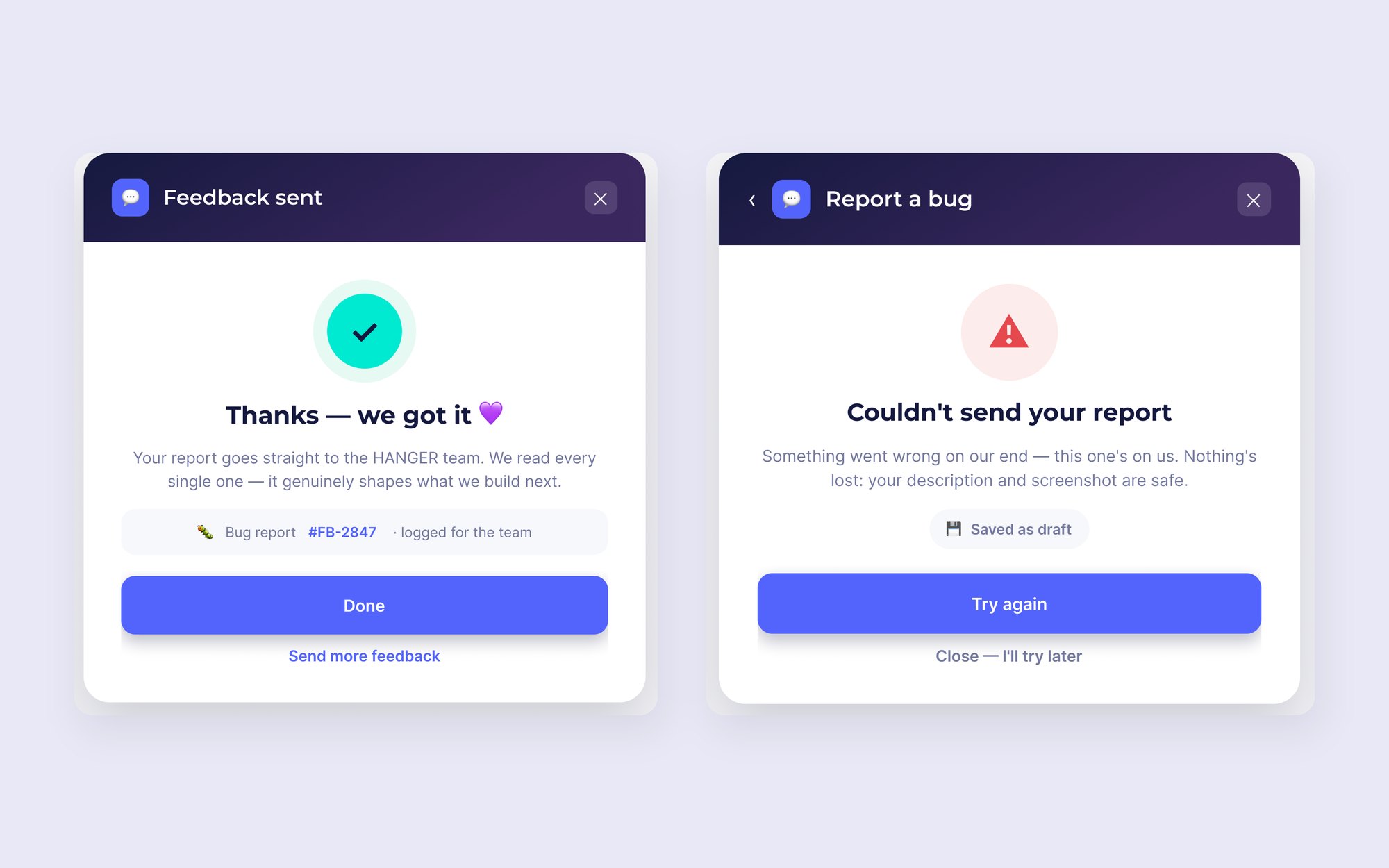
3 · Sent or failed
A confirmation with a reference number, or an error that saves the draft.
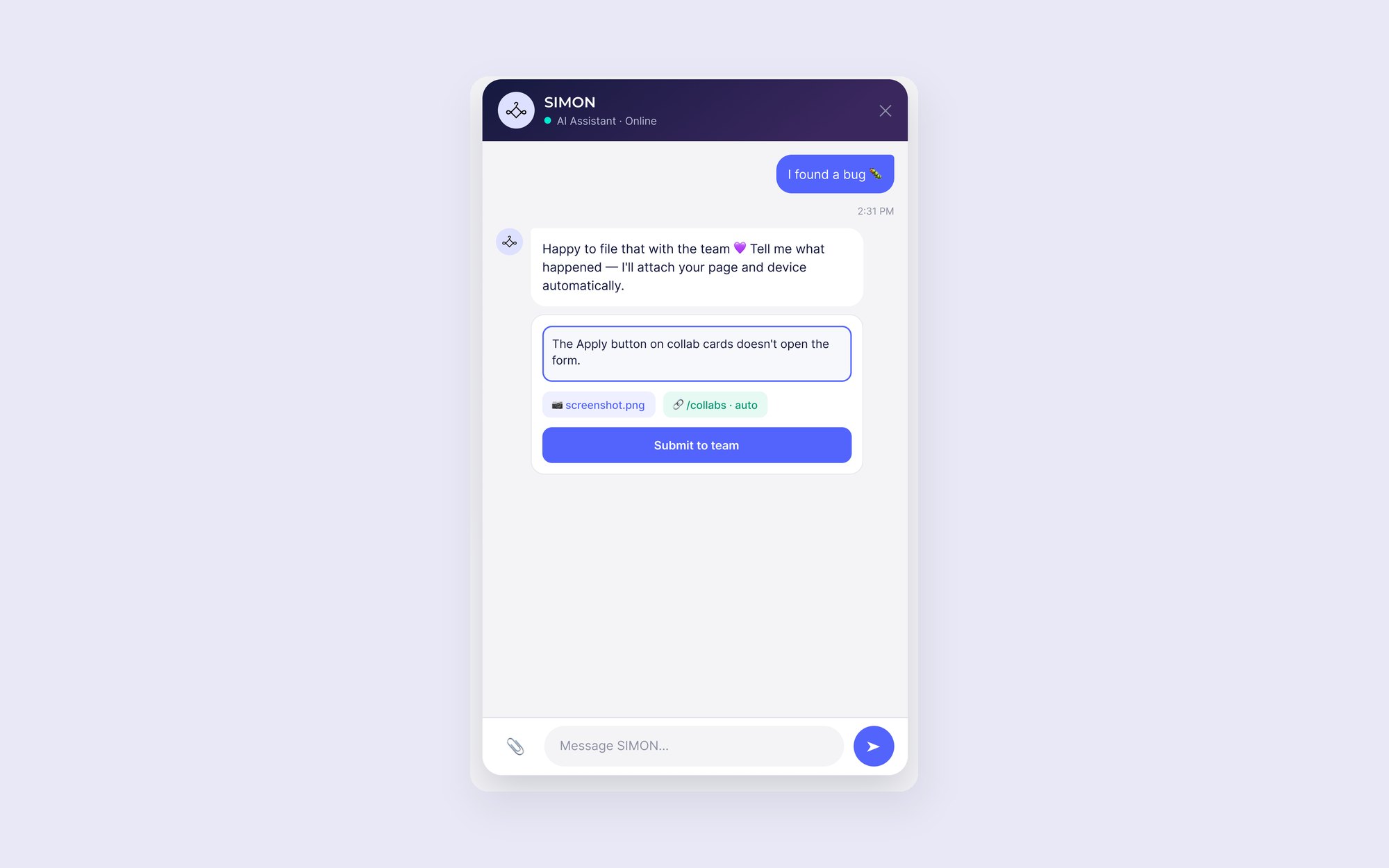
4 · SIMON shortcut
Members can report a bug in chat, and SIMON files the same report.
My AI workflow
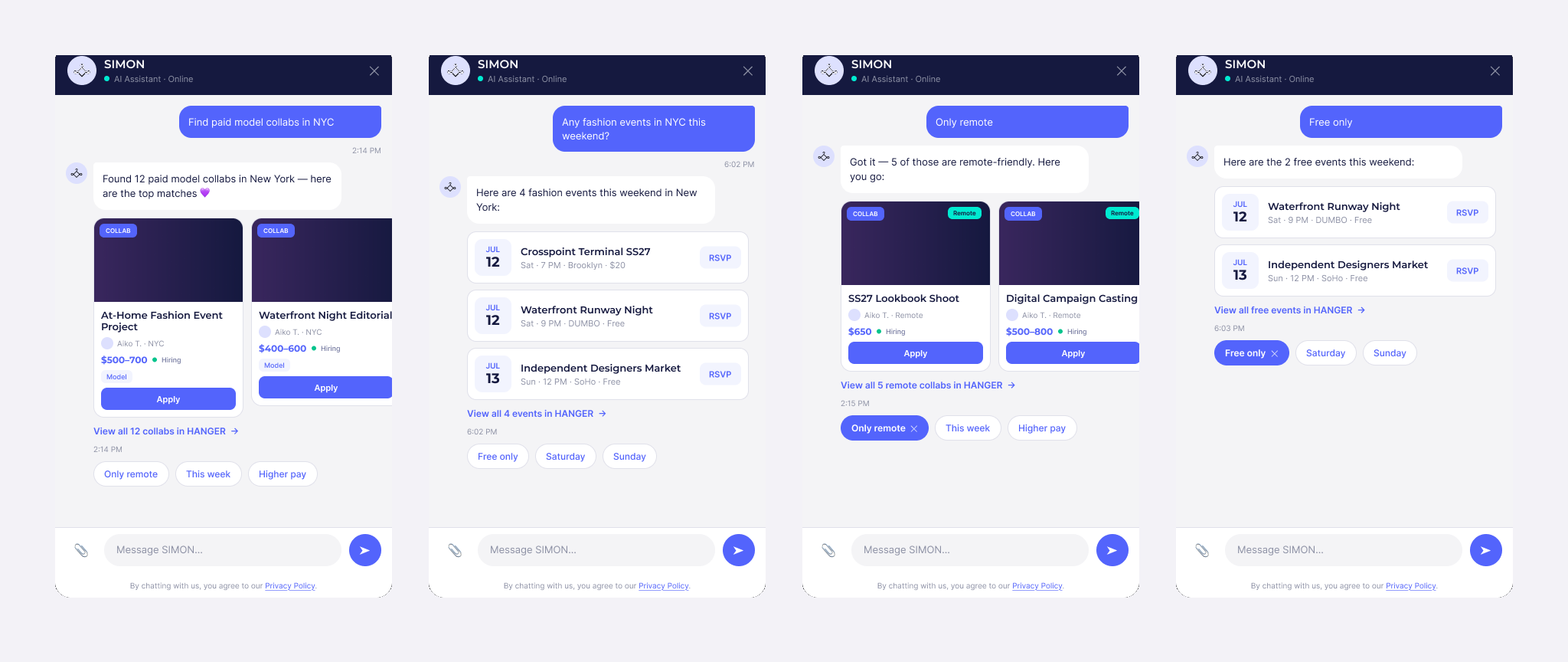
I used Claude, ChatGPT, Gemini, and Figma AI to research chatbot patterns, draft information architecture, and compare early layouts, like an image carousel vs. a compact list for event recommendations. The decisions stayed mine.
Impact
“There are options for the user to easily pick and choose any questions that are already pre-laid out for them. So I think it's very user friendly.” — Design Lead, Hanger
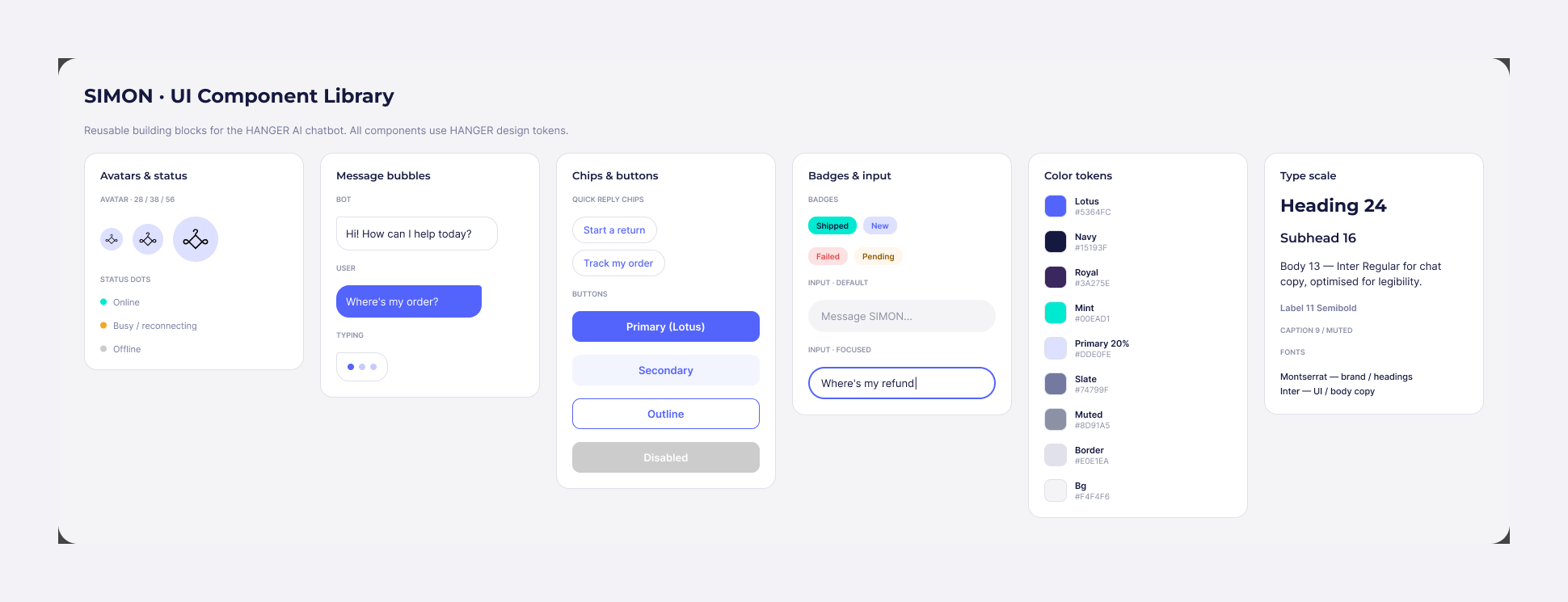
Support tickets now come in through SIMON's handoff flow, and its UI patterns went into Hanger's Figma design system.
Reflection
01
Guided FAQs instead of open chat, because at launch accuracy mattered more than novelty.
02
I now design the unhappy paths as carefully as the happy one.
03
Tracking resolution rate, handoff rate, and answer ratings at launch would let real conversations shape V2.
