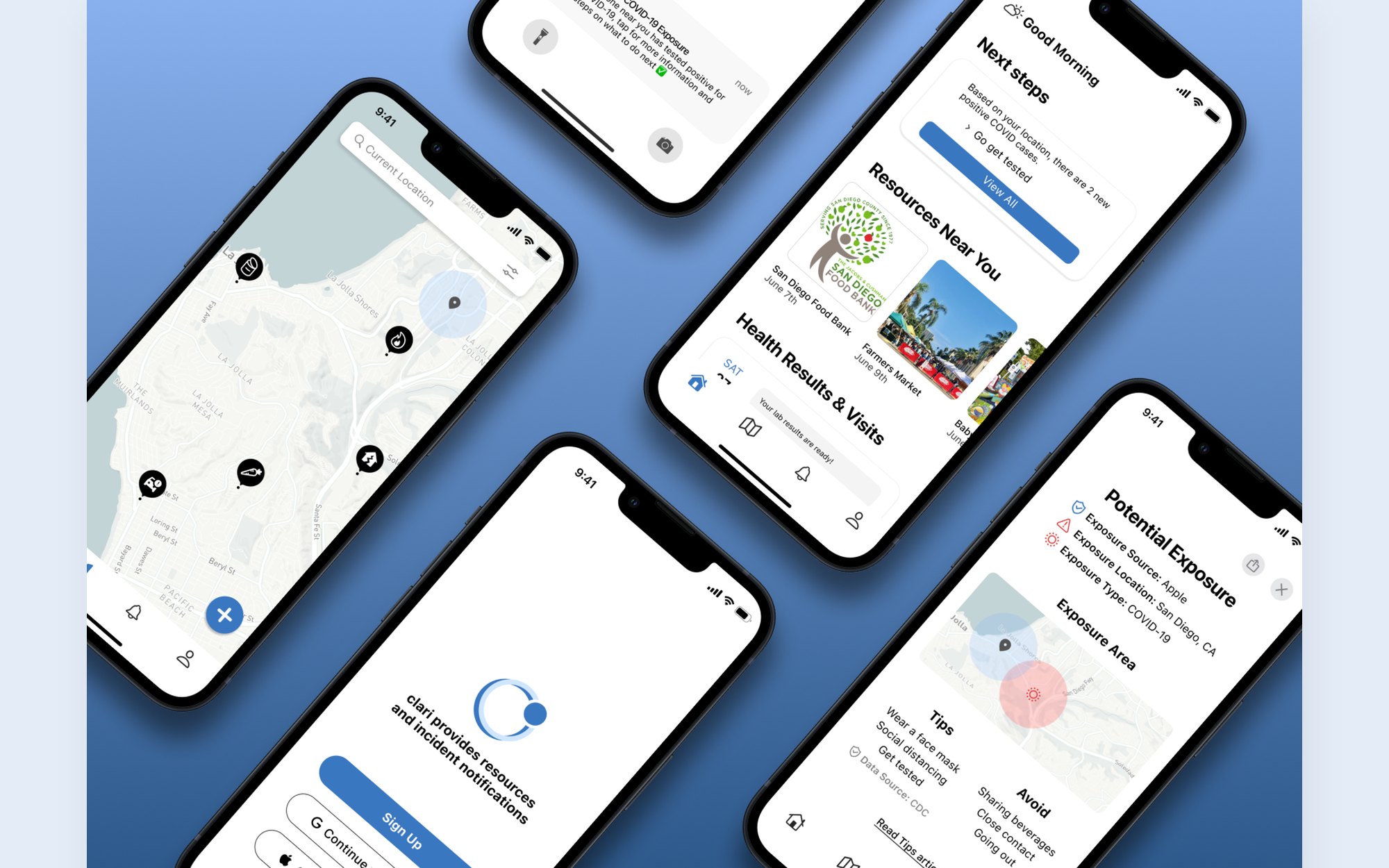
Clari sends incident alerts with clear next steps and connects people with local resources, from food banks to health appointments. As design consultants at the UCSD Design Lab's Center for Health, our team of five took it from interviews to a tested prototype in one quarter.
27
Interviews on and off campus
12
Usability testers across 2 rounds
4 of 5
Round 2 testers found Clari easy to understand
Problem
Using COVID-19 as a reference point, most of the people we interviewed pieced together updates from social media and government sites, and many had struggled to reach everyday resources like food when things went wrong.
How might we give the public credible, timely information for both their basic and personal needs?
Research
I compared Citizen, Waze, and Apple's emergency alerts. They cover incidents well, but the information is hard to digest and rarely includes next steps.
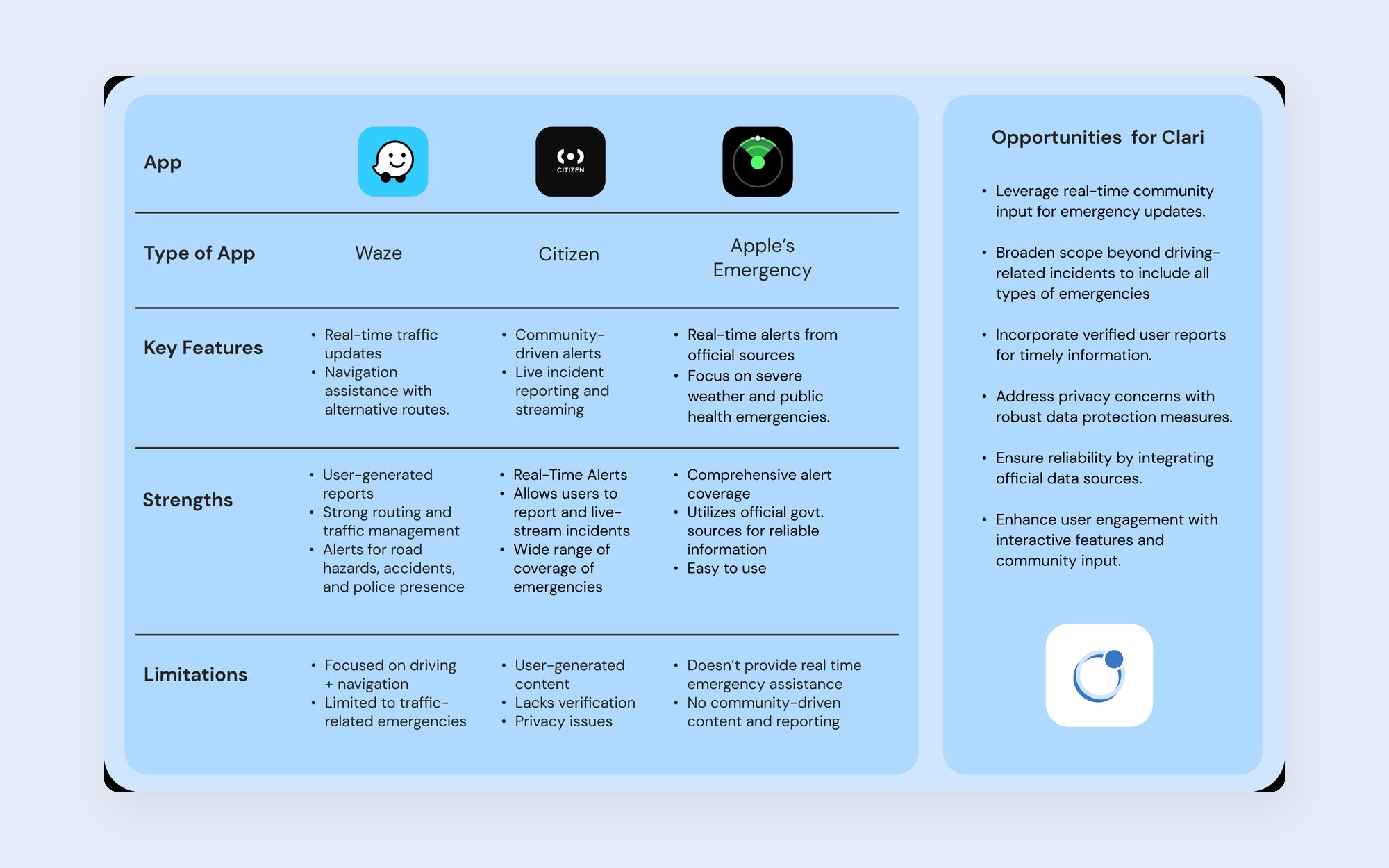
We interviewed 15 people on campus and 12 off campus, from high school students to university staff. Across every group, people wanted reliable information without being overwhelmed by it.
Usability testing
In round 1, 7 people thought aloud through 5 scenarios: onboarding, the dashboard, a notification, the map, and settings. We wanted to know if they could tell what Clari was for, read the map, and act on an alert.
“In the beginning, I thought it was an app about tracking health and weight loss goals.” — Round 1 tester
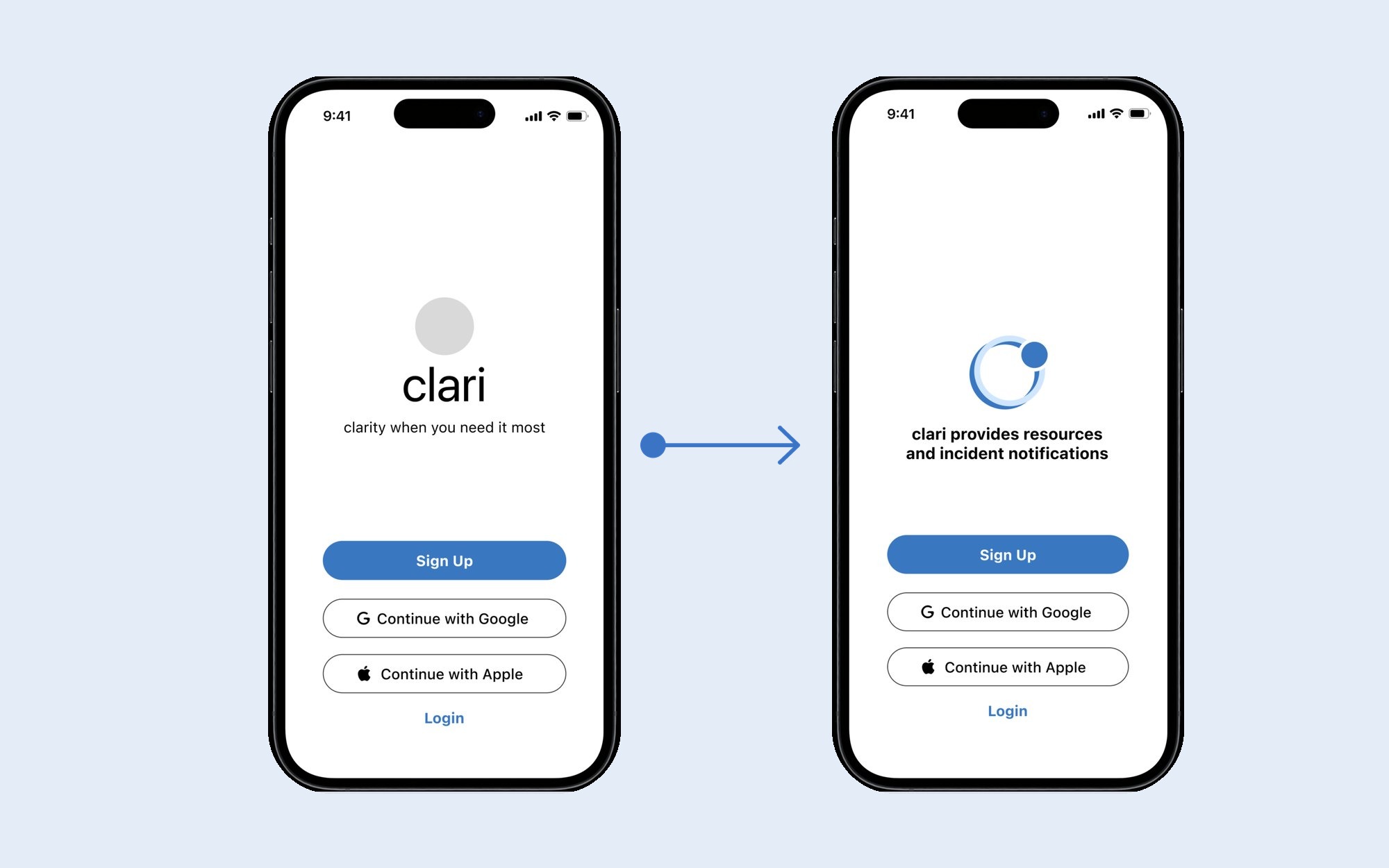
6 of 7 testers · Opening screen
"Clarity when you need it most" became "Clari provides resources and incident notifications."
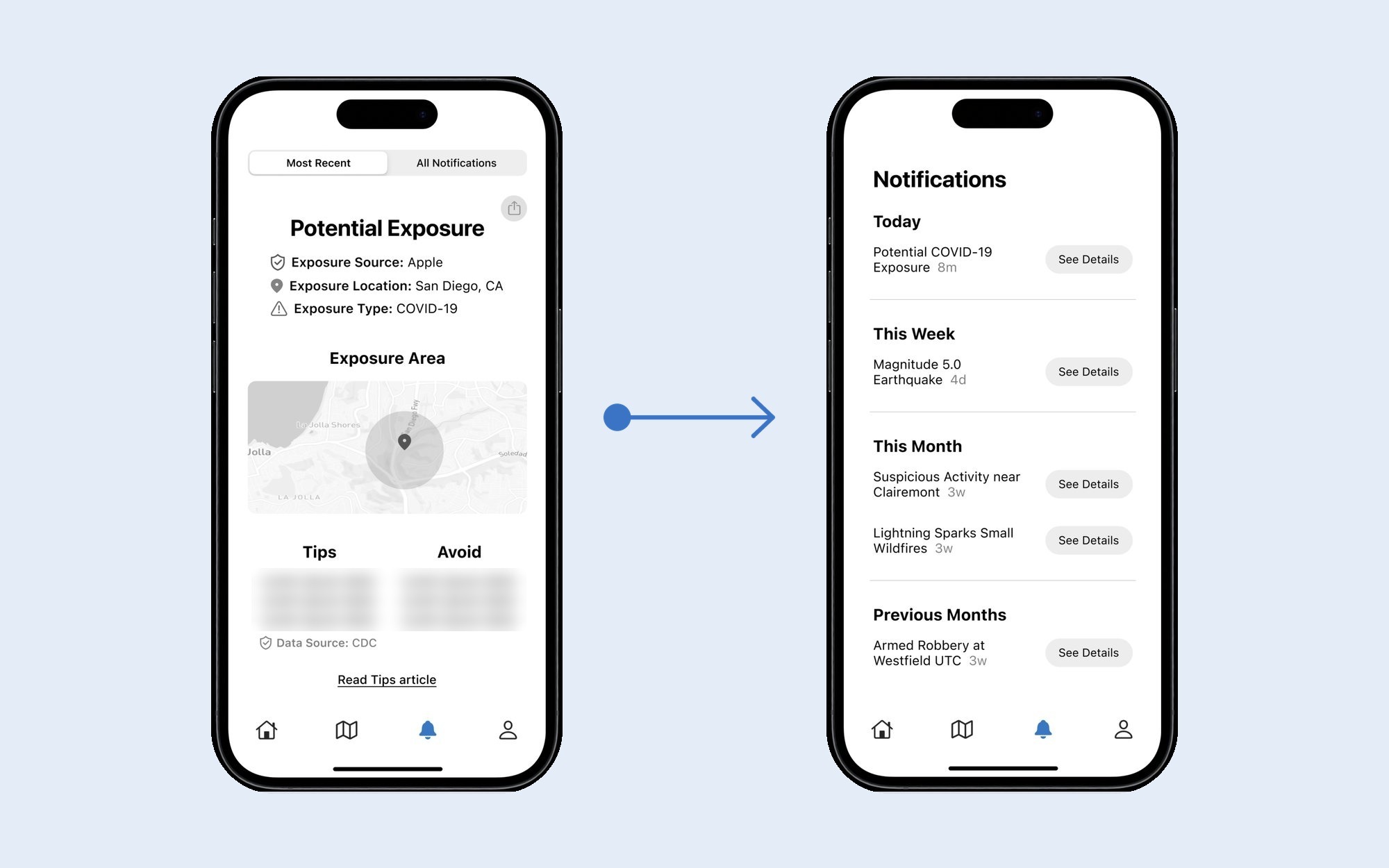
Notifications
Recent and past alerts merged into one timeline grouped by today, this week, and this month.
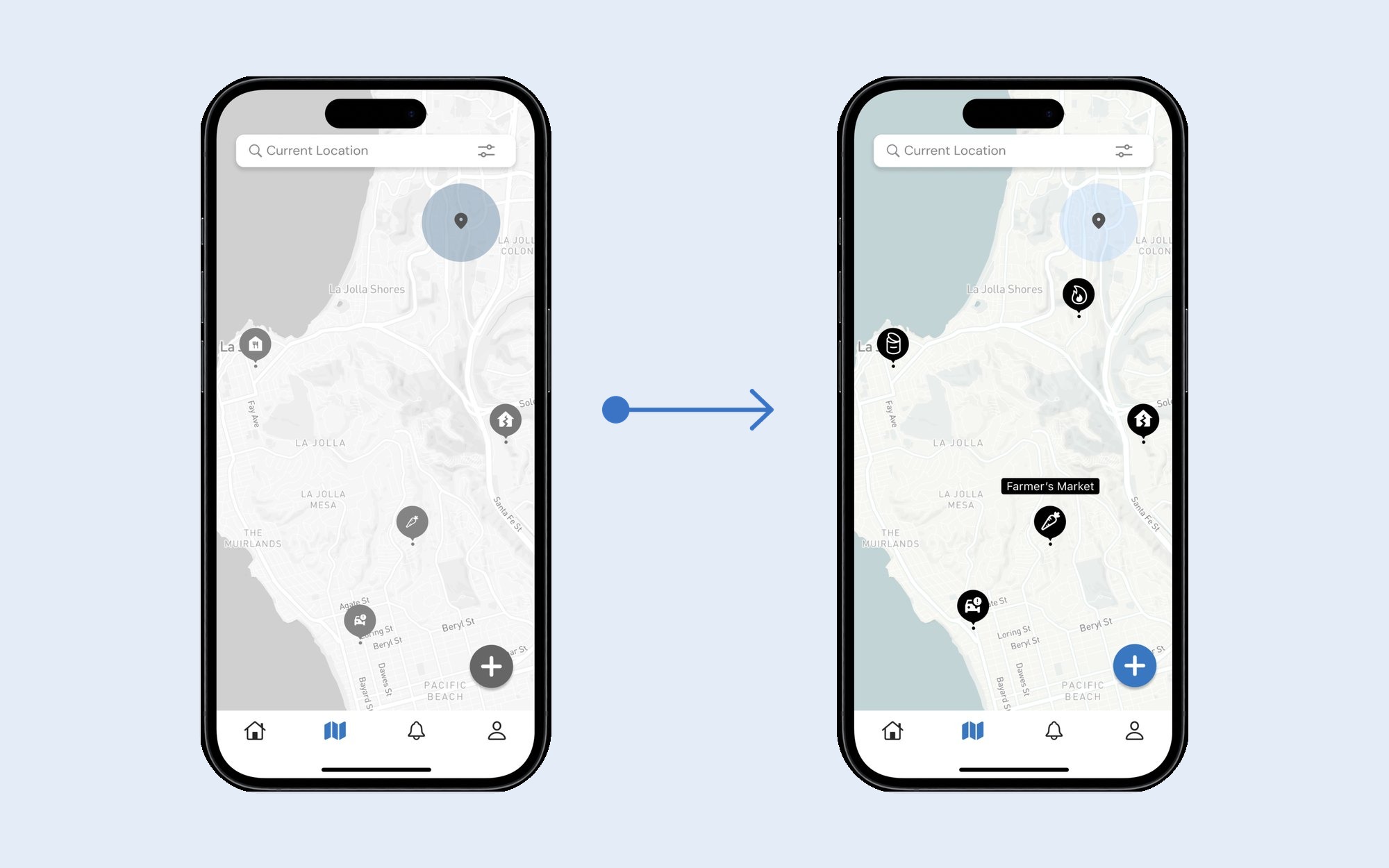
7 of 7 testers · Map
We redesigned the icons and added labels so every resource is clear at a glance.
The remaining feedback was minor, like font sizes and placement, which we fixed in the final prototype.
Final design
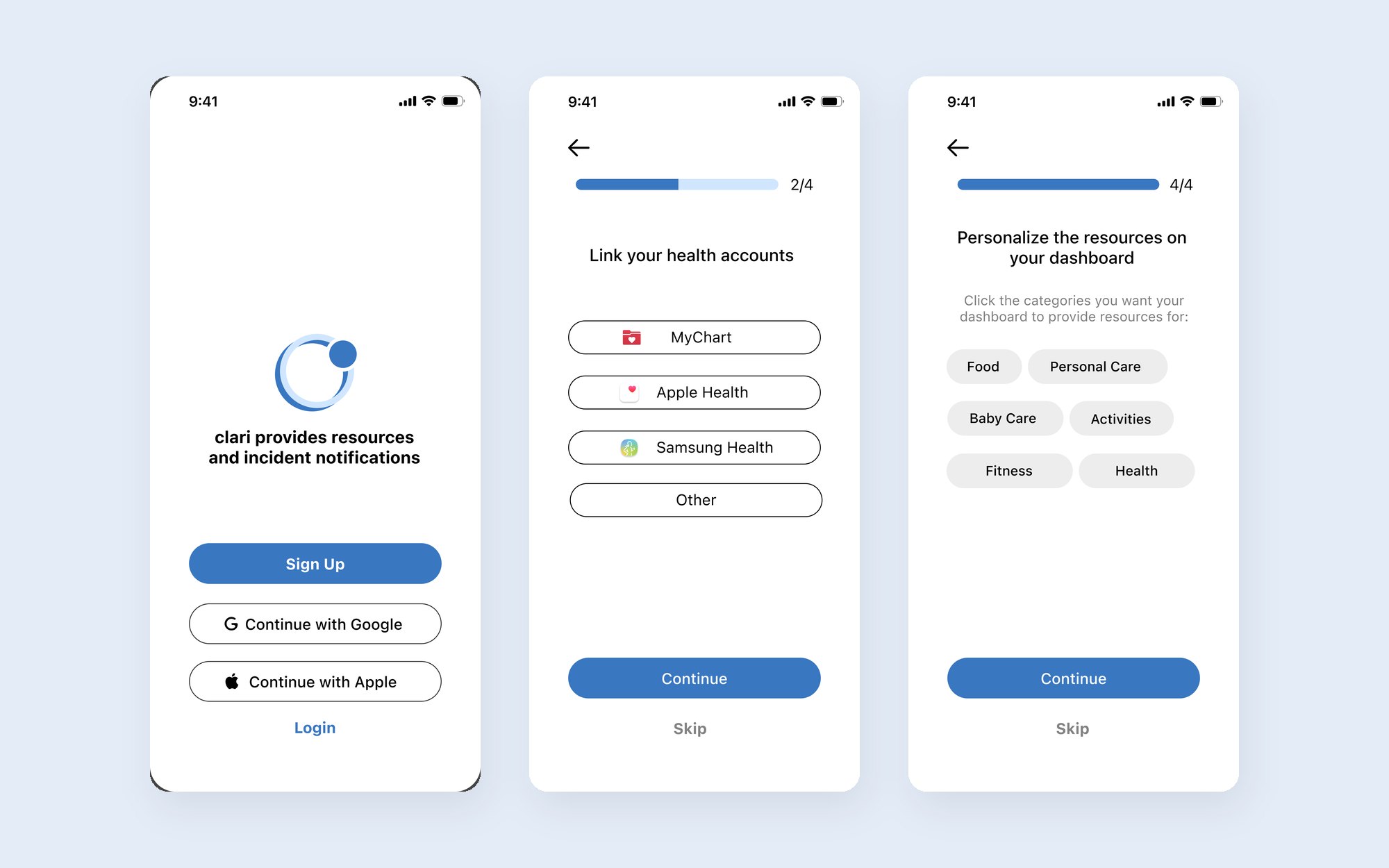
1 of 4 · Onboarding
Link health accounts like MyChart and choose which topics to see or hide.
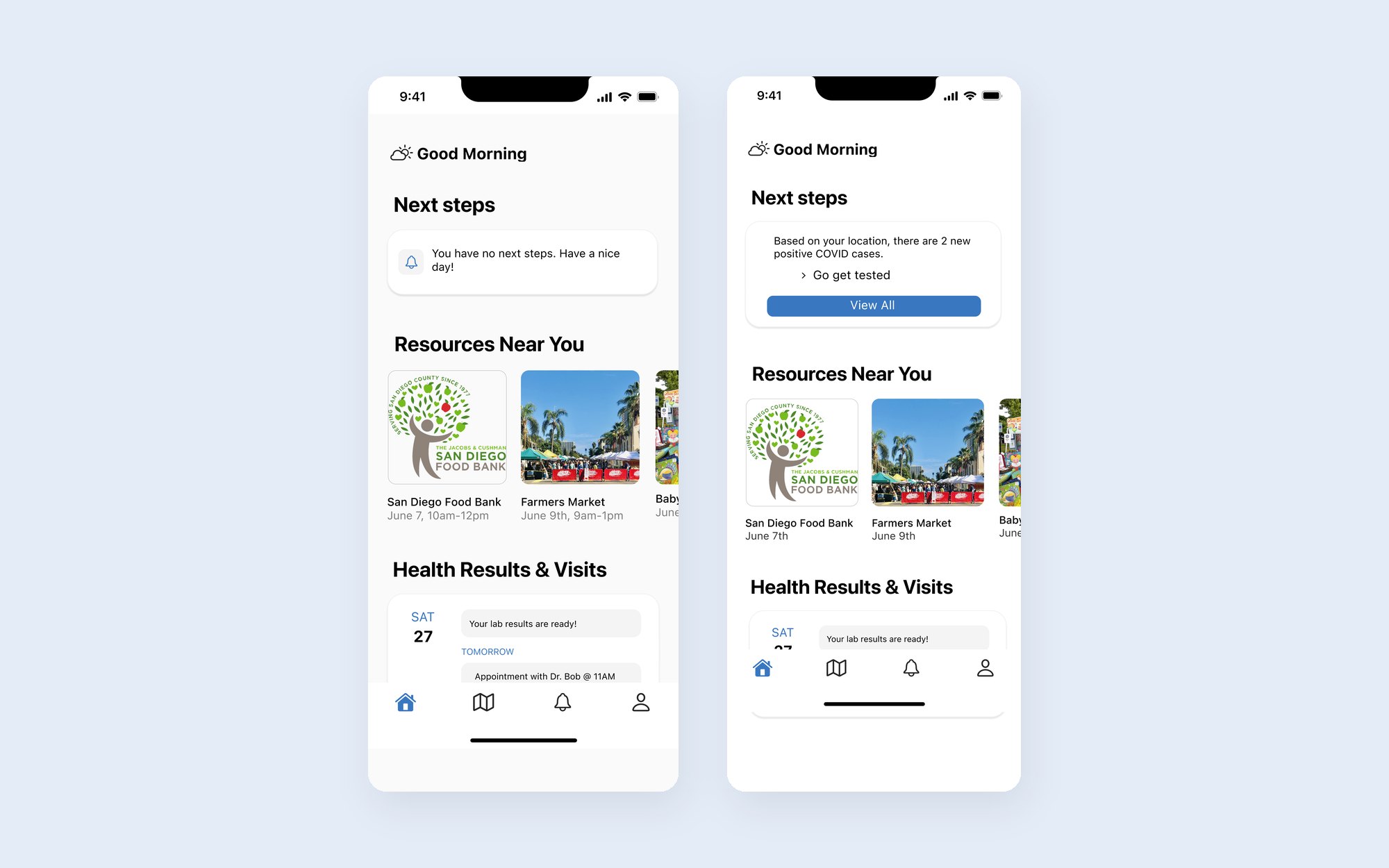
2 of 4 · Home
Next steps, resources near you, and health visits in one place.
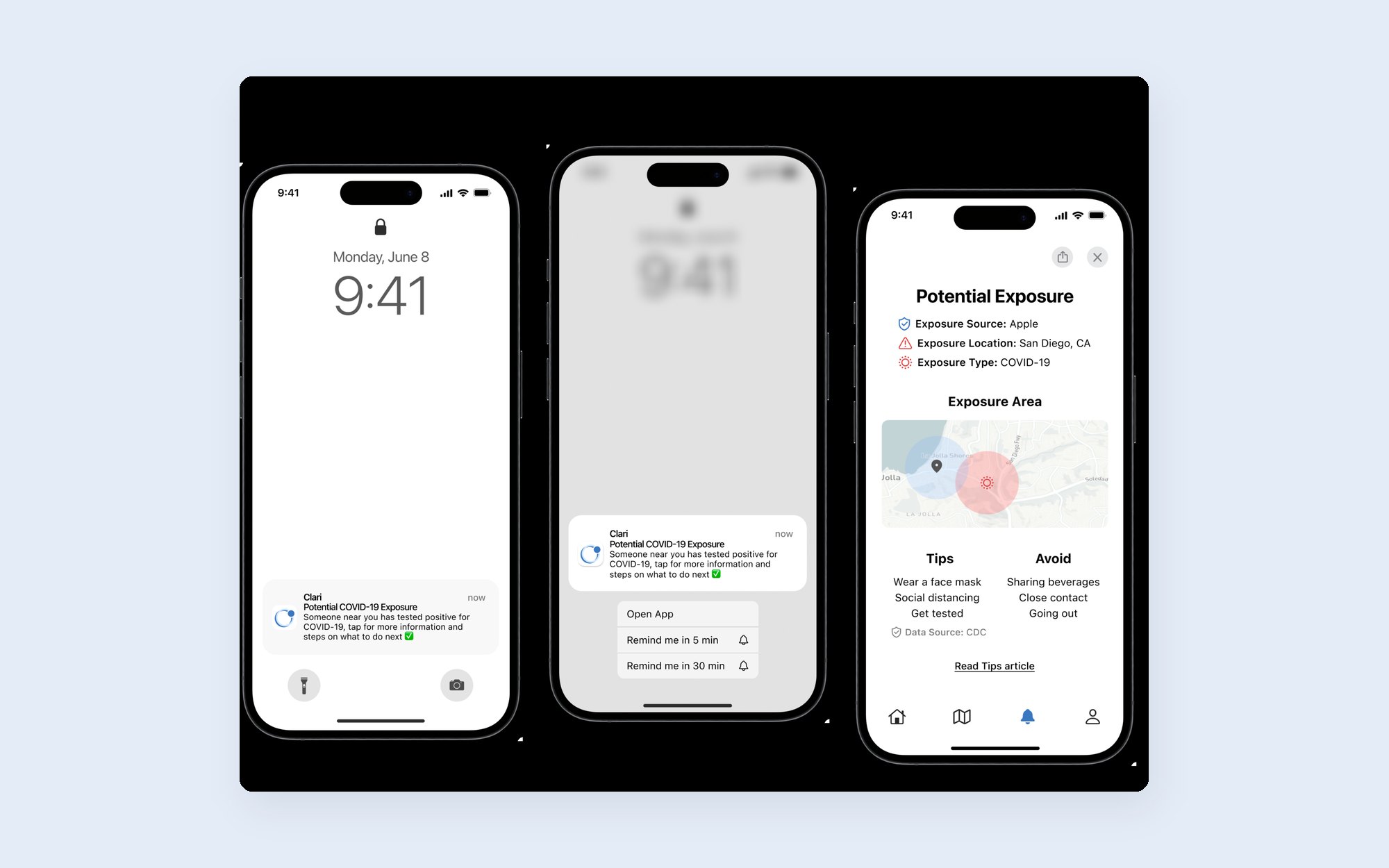
3 of 4 · Alerts
A notification opens to what happened, where, and a short list of what to do.
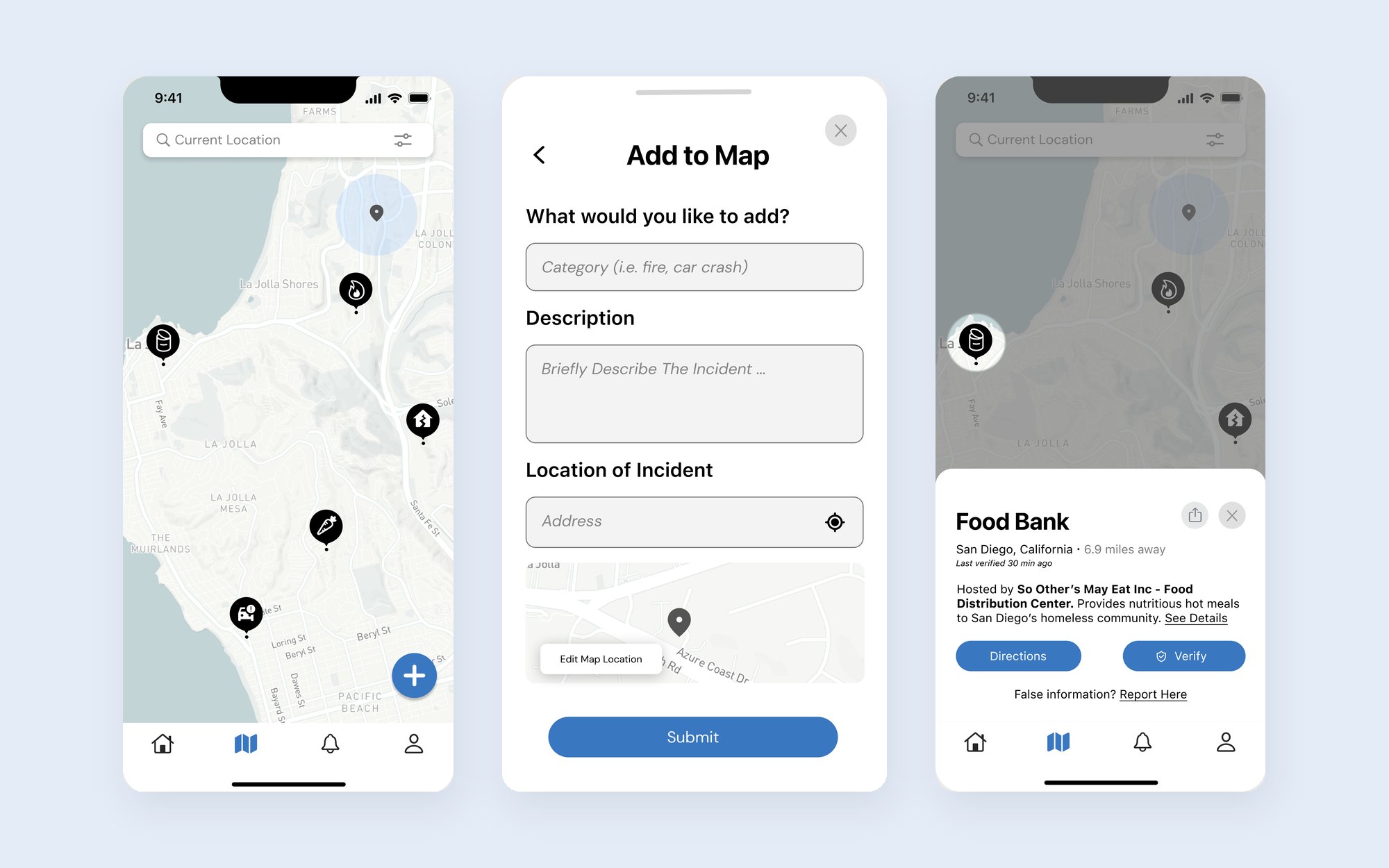
4 of 4 · Map
Find food banks or incidents nearby, report your own, and verify what others post.
Reflection
01
Most testers misread our tagline. Saying exactly what the app does fixed it.
02
Every round 1 tester struggled with map icons we thought were clear.
03
Community reports need clear rules, like how many people must confirm an incident before others see it. That's where I'd start the next round.
